

How much does the ChatGPT API cost in 2026?
OpenAI API pricing is pay-as-you-go based on tokens. GPT-4o costs $5.00/1M input and $15.00/1M output tokens. The high-volume GPT-4o mini is significantly cheaper at $0.15/1M input and $0.60/1M output tokens. Most businesses can scale support bots for under $5/month.
Is ChatGPT API Worth the Investment in 2026?
The chatgpt api price is the most critical metric for any business building AI-native applications today. If you are running an AI automation agency or scaling internal tools, understanding your margins starts with the raw cost of tokens. In 2026, the market has shifted from "can we build it?" to "can we scale it profitably?"
ChatGPT API is a programmatic interface that allows developers to integrate OpenAI's large language models into their own software. This connectivity enables automated reasoning and content generation at scale, making it the backbone of modern AI agents. Understanding its pricing is the only way to maintain a profitable margin in 2026.
FinOps teams at firms like ScaleAI and HubSpot often ask: does openai api cost money? Yes. Unlike the flat monthly subscription of ChatGPT Plus, the API operates on a pay-as-you-go model. You pay for exactly what you use. This distinction is critical. ChatGPT Plus is for human interaction. The API is for machine-scale automation.
Simple. Efficient. Scaleable.
OpenAI has aggressively lowered prices over the last two years. According to OpenAI (2025): "The cost of intelligence has dropped by over 90% since the launch of GPT-3.5." This trend makes complex workflows like agentic AI commercially viable for mid-market companies.
We see businesses struggle with unpredictable billing. They start a pilot and get surprised by the bill when they move to production. This guide breaks down every cent of the openai api cost so you can plan your budget with precision. We also explore the hidden efficiencies that separate profitable AI products from expensive experiments.
- Detailed cost breakdown for GPT-4o, GPT-4o mini, and the o1 reasoning series
- Real-world cost scenarios for support bots, document analysis, and SEO workflows
- The technical mechanics of tokens, context windows, and prompt caching discounts
- 7 proven strategies to slash your OpenAI API spend by up to 90%
- How to build your own real-time cost tracking dashboard
OpenAI API Model Pricing Breakdown: The 2026 Overview
The openai api model pricing depends entirely on which "brain" you choose for your application. OpenAI currently offers several tiers of models, ranging from high-intelligence flagship models to lightning-fast, low-cost options. Selecting the right model for each specific sub-task in your workflow is the secret to high-margin AI automation.
GPT-4o (Omni): The Flagship Balance
GPT-4o is the current flagship. It is designed for multimodal speed and reasoning. It is significantly cheaper than the legacy GPT-4 Turbo while being faster. For most enterprise-grade developing artificial intelligence projects, this is the default choice for high-accuracy requirements.
- Input Tokens: $5.00 per 1M tokens
- Output Tokens: $15.00 per 1M tokens
GPT-4o excels at understanding complex instructions and maintaining coherence over long conversations. If your application requires "System 2" thinking — slow, deliberate, and accurate — this is your model. It thinks before it speaks.
GPT-4o mini: The High-Volume Workhorse
This model replaced GPT-3.5 Turbo as the high-volume workhorse. It is incredibly cheap. If you are building a simple customer service bot or a basic data extraction tool, GPT-4o mini offers the best ROI in the industry.
- Input Tokens: $0.15 per 1M tokens
- Output Tokens: $0.60 per 1M tokens
The efficiency of GPT-4o mini cannot be overstated. It is capable of handling most classification, summarization, and basic chat tasks at a fraction of the cost of its larger siblings. UseShift often uses it as a "router" model — an inexpensive layer that decides whether a query needs the more expensive GPT-4o or can be handled locally. This saves thousands.
o1 and o1-mini: The Reasoning Specialists
Released in late 2024 and refined in 2025, the "o1" series introduces "Chain of Thought" reasoning before it even starts generating text. This model is for math, hard science, and complex multi-step logical planning.
- o1-preview: $15.00 (Input) / $60.00 (Output) per 1M tokens.
- o1-mini: $3.00 (Input) / $12.00 (Output) per 1M tokens.
While the price for o1 is significantly higher, it replaces the need for complex, hand-coded logic trees. If your agent needs to solve a difficult engineering problem, the extra cost for "thinking time" is often cheaper than a human developer's time. Reasoning costs more. Accuracy pays for itself.
Specialized Models: Multimodal and More
Beyond text, you must account for specialized APIs that handle vision, audio, and image generation:
- Embeddings: Essential for RAG (Retrieval-Augmented Generation). Models like `text-embedding-3-small` cost $0.02 per 1M tokens.
- DALL-E 3: Priced per image. Standard quality at 1024x1024 costs $0.04. HD quality costs $0.08.
- Whisper (v3): Priced at $0.006 per minute. It remains the gold standard for transcribing meeting notes or voice-to-text interfaces.
- TTS (Text-to-Speech): $15.00 per 1M characters for standard voices; $30.00 for HD voices.
How Much Does it Cost to Use ChatGPT API? (Real-World Scenarios)
The answer to how much does it cost to use chatgpt api depends on your specific traffic patterns and token density. A token is roughly 4 characters or 0.75 words. A typical 1,000-word article consumes about 1,300 tokens for the output alone, plus whatever context you sent in the prompt.
Scenario A: The Customer Support Bot (High Volume, Low Margin)
Imagine a bot that handles 10,000 conversations per month. Each conversation averages 5 messages, with 200 input tokens (history + prompt) and 100 output tokens per message.
- Total Input Tokens: 10,000 * 5 * 200 = 10,000,000
- Total Output Tokens: 10,000 * 5 * 100 = 5,000,000
Using GPT-4o mini, the openai api costs would be:
- Input: 10M * ($0.15 / 1M) = $1.50
- Output: 5M * ($0.60 / 1M) = $3.00
- Total Monthly Cost: $4.50.
This demonstrates why AI has disrupted the traditional BPO (Business Process Outsourcing) model. A human team would cost thousands of dollars for the same volume.
Scenario B: The Enterprise Document Analyst (Low Volume, High Complexity)
Now consider a system analyzing 500 massive legal contracts per month. Each contract is 50 pages (approx. 40,000 tokens). You use GPT-4o for high reasoning accuracy.
- Total Input Tokens: 500 * 40,000 = 20,000,000
- Total Output Tokens (Summary): 500 * 2,000 = 1,000,000
Costs using GPT-4o:
- Input: 20M * ($5.00 / 1M) = $100.00
- Output: 1M * ($15.00 / 1M) = $15.00
- Total Monthly Cost: $115.00.
While higher than the chatbot, the value provided (analyzing 25,000 pages of legal text) is enormous.
Scenario C: Content Generation Workflows at Scale
For an n8n workflow generating 1,000 SEO articles per month, the output tokens become the primary driver. If each article is 3,000 words, that is 4,000 tokens per article.
- Output: 1,000 * 4,000 = 4,000,000 tokens.
Using GPT-4o, this would cost $60 just for the output generation. Adding the context, research turns, and multiple drafting cycles can easily push this to $200 per month. This is where infrastructure as code for monitoring becomes essential to prevent overspending.
Technical Mechanics: Tokens, Context Windows, and Prompt Caching
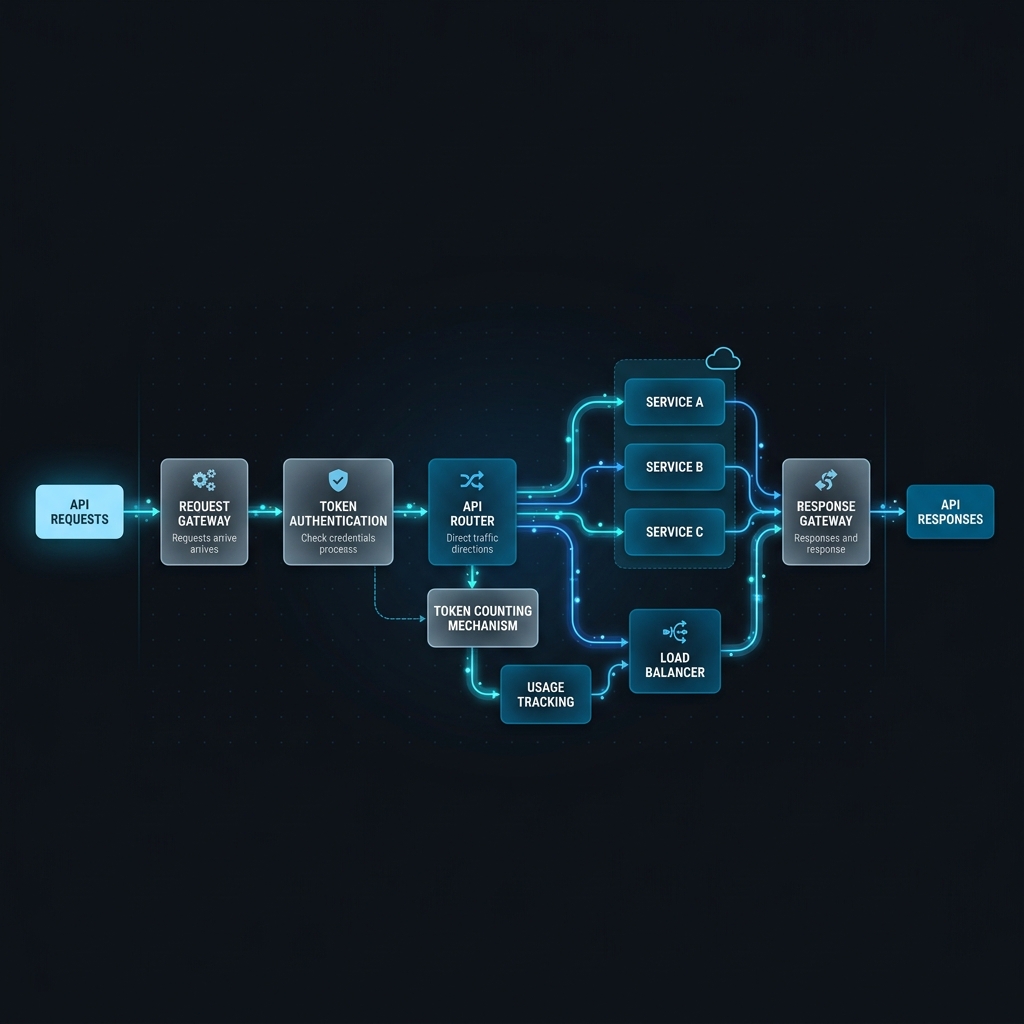
The cost of openai api is determined by how efficiently you manage state. If you send the same 10,000-word knowledge base with every single request, your bill will skyrocket.
The Token Math and Encoding
Tokens are the currency of LLMs. 1,000 tokens is approximately 750 words. OpenAI uses the `cl100k_base` tokenizer for GPT-4 series models. Keep in mind that input tokens (what you send) are always cheaper than output tokens (what the AI generates). This is because generation requires autoregressive sampling — a much more compute-intensive process than processing a static input block.
Input is cheap. Output is dear.
Context Window Limits and Financial Impact
GPT-4o supports a 128,000-token context window. This allows you to fit a whole book into a single prompt. However, just because you can does not mean you should. Processing a full context window on every turn is expensive. According to technical benchmarks (2025): "Model performance often degrades slightly at the extreme edges of very large context windows." Keeping your prompts lean saves money and improves quality.
Prompt Caching: The 50% Discount
This is a major feature for reducing openai api costs. If you send a prompt that starts with the same text as a previous prompt, OpenAI can "cache" that prefix. You get a 50% discount on cached input tokens. For applications that use a massive system prompt or a large static database, this is a massive win. We implement prompt caching for all our enterprise clients to guarantee they aren't paying twice for the same "instructions" layer. (Insider note: Always place your dynamic content *after* the static system prompt to maximize cache hits).
The Ultimate ChatGPT API Pricing Comparison Table
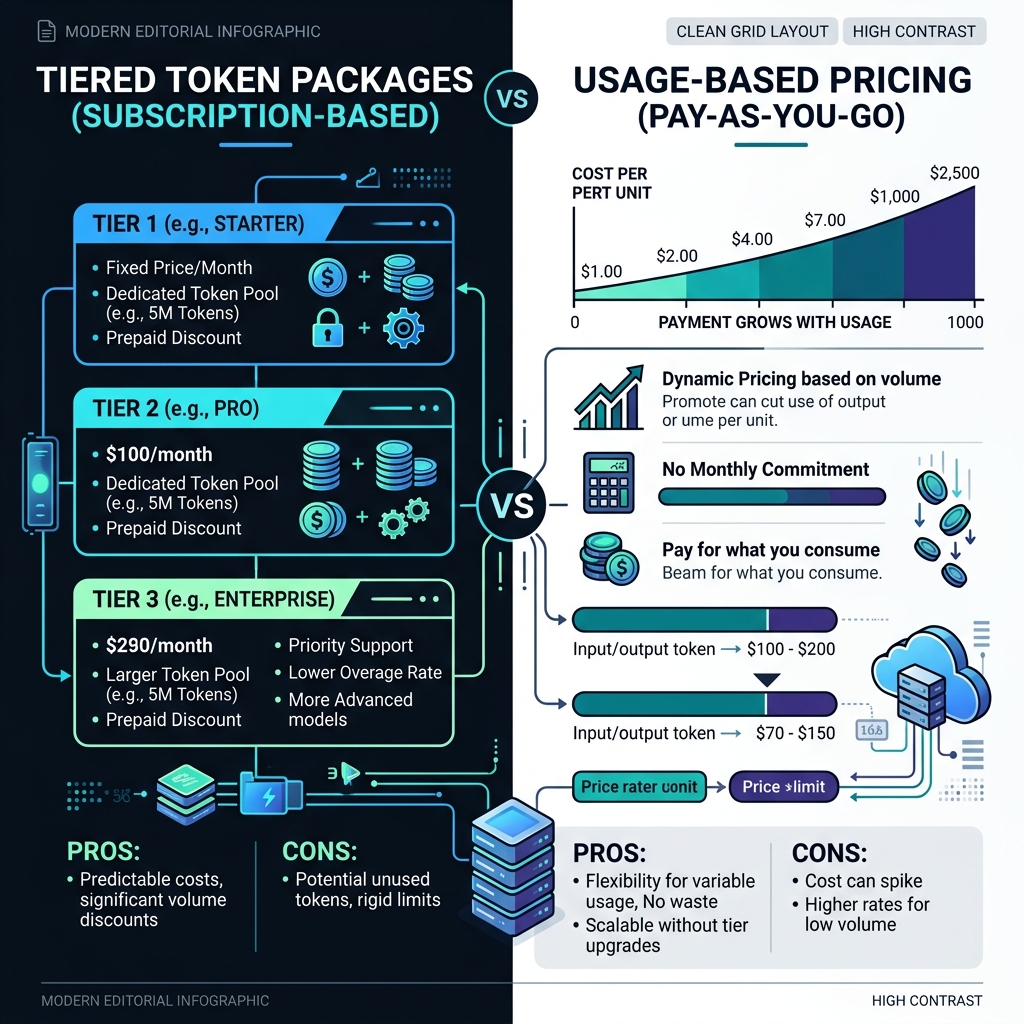
The following table summarizes the openai api model pricing as of early 2026. Prices are per 1 million tokens.
| Model | Input Price (1M) | Output Price (1M) | Context Window | Best Use Case |
|---|---|---|---|---|
| GPT-4o | $5.00 | $15.00 | 128k | High-reasoning, complex logic, coding |
| GPT-4o mini | $0.15 | $0.60 | 128k | Chatbots, simple extraction, summary |
| GPT-4 Turbo | $10.00 | $30.00 | 128k | Legacy enterprise systems |
| o1-preview | $15.00 | $60.00 | 128k | Deep scientific reasoning, math |
| o1-mini | $3.00 | $12.00 | 128k | Fast technical reasoning, debugging |
| o1 (Full) | $15.00 | $60.00 | 128k | Ultimate problem solving |
As you can see, the spread is enormous. Choosing GPT-4o when GPT-4o mini would suffice is a 33x price increase for no reason. This is why a "Model Router" strategy is so effective.
Using a ChatGPT API Cost Calculator
You should never guess your AI spend. An openai api pricing calculator or a dedicated chatgpt api pricing calculator is essential during the design phase of your project.
Manual calculation is prone to error. You might forget the overhead of "system messages" or the tokens used in the chat history. A professional tool will ask for:
- Average input tokens per request.
- Average output tokens per response.
- Number of requests per user per day.
- Number of active users.
- Expected prompt caching hit rate (usually 70-80% for consistent agents).
By plugging these into an openai api cost calculator, you can see exactly when your project stops being profitable. For example, if your SaaS charges $20/month but a heavy user generates $25/month in API costs, you have a "toxic user" problem. We help clients build dashboards that track these metrics in real-time.
Managing and Optimizing OpenAI API Costs: 7 Proven Strategies
Optimization is not just about choosing the cheapest model. It is about architectural efficiency. Here are the strategies we use at UseShift to keep openai api costs under control.
1. Usage Tiers and Rate Limits
OpenAI uses a tiered system (Tier 1 to Tier 5). Your tier is determined by your total lifetime spend and the age of your account. Higher tiers get higher rate limits (Requests Per Minute and Tokens Per Minute). If you are scaling a viral app, you need to reach Tier 4 or 5 quickly to avoid "Rate limit reached" errors. This sometimes requires "pre-funding" your account to jump tiers.
2. Setting Hard and Soft Budget Limits
The OpenAI dashboard allows you to set hard and soft limits. A soft limit sends an email when you hit a certain dollar amount. A hard limit shuts off the API entirely. does openai api cost money if you go over? No, because the hard limit prevents further usage. Always set a hard limit to protect against "infinite loops" in your code that could drain your bank account overnight. Loops kill budgets.
3. OpenAI API Key Price vs. Credits
There is no openai api key price in the sense of a flat fee to get started. Generating a key is free. However, you must add credits to your account. Most new accounts are on a prepaid model. You buy $50 or $100 in credits, and your usage draws from that balance. This prevents surprise bills but requires you to monitor your balance to avoid service interruptions.
4. The Batch API: The 50% Savings Hack
If your task is not time-sensitive (e.g., generating a weekly report or processing a backlog of data), use the Batch API. It offers a 50% discount on the chatgpt api price. You submit a file of requests, and OpenAI returns the results within 24 hours. This is the single easiest way to slash your openai api costs for non-interactive tasks. Low priority. High savings.
5. Semantic Caching
While OpenAI offers prompt caching, you can implement your own "semantic cache" using a vector database like Pinecone or Weaviate. If a user asks a question that has already been answered, you return the cached response from your database instead of calling the API. This reduces your cost of openai api to zero for common queries.
6. Fine-Tuning: Quality at Scale
Fine-tuning allows you to train a smaller model (like GPT-4o mini) to perform as well as a larger one for a very specific task. While the openai api model pricing for fine-tuned models is higher ($3.00/1M input, $6.00/1M output), you can often use a much shorter prompt. If you can cut your prompt from 2,000 tokens to 200 tokens using fine-tuning, you save 90% on input costs.
7. RAG vs. Long Context
Retrieval-Augmented Generation (RAG) involves searching a database for relevant "chunks" of text and only sending those to the AI. This is almost always cheaper than sending a massive 100,000-token document into the prompt. Even with the chatgpt api price drops, RAG remains the most scalable architecture for data-heavy applications.
Competitive Comparison: Value for Money in 2026
To understand if the chatgpt api price is fair, we must look at the competition. In 2026, the "Big Three" (OpenAI, Anthropic, and Google) are in a price war.
- Anthropic Claude 3.5 Sonnet: Often preferred for creative writing and nuanced coding. Its pricing is nearly identical to GPT-4o.
- Google Gemini 1.5 Pro: Offers a massive 2-million-token context window. If you have extremely large datasets, Google's "per-character" pricing can sometimes beat OpenAI's "per-token" pricing for certain languages.
- DeepSeek and Llama 3 (Self-Hosted): For massive scale, hosting your own Llama 3 models on Google Cloud computing infrastructure can be cheaper if you are processing billions of tokens monthly.
However, for most businesses, OpenAI's developer ecosystem and reliability make the openai api cost well worth the premium. The time saved on engineering and orchestration usually outweighs the small difference in token price.
Building Your Own Cost Tracker: A Technical Guide
Don't wait for the OpenAI dashboard to update. You can track your chatgpt api price in real-time by capturing the `usage` object in every API response.
The Usage Object
Every response from the OpenAI API includes a JSON object like this:
"usage": {
  "prompt_tokens": 50,
  "completion_tokens": 20,
  "total_tokens": 70,
  "prompt_tokens_details": {
    "cached_tokens": 0
  }
}
Real-Time Monitoring Code (Node.js Example)
By logging this data to a database like Supabase or BigQuery, you can build a real-time chatgpt api cost calculator dashboard.
const response = await openai.chat.completions.create({
  model: "gpt-4o",
  messages: [{ role: "user", content: "Hello!" }],
});

const { prompt_tokens, completion_tokens } = response.usage;
const cost = (prompt_tokens * 0.000005) + (completion_tokens * 0.000015);

console.log(`Estimated cost for this request: $${cost.toFixed(6)}`);
// Save to your internal billing system
await saveUsageToDb(userId, prompt_tokens, completion_tokens, cost);
This level of visibility is what separates professional AI implementations from hobbyist projects. It allows you to implement per-user billing or usage quotas accurately. Visibility equals control.
Security, Compliance, and Data Usage: The Hidden Costs
One of the biggest misconceptions is that OpenAI uses API data to train their models. They do not. According to OpenAI's Enterprise Privacy Policy (2025): "Data submitted via the API is not used to train our models unless you explicitly opt-in."
This is a massive advantage for businesses concerned about intellectual property. You can process sensitive customer data knowing it won't leak into the global GPT weights. However, there are "compliance overheads" to consider. If your industry requires data to stay within a specific geographic region (e.g., GDPR), you may need to use Azure OpenAI Service. While the openai api pricing is the same on Azure, the setup and networking costs may be higher.
Conclusion: Scaling Your AI Strategy
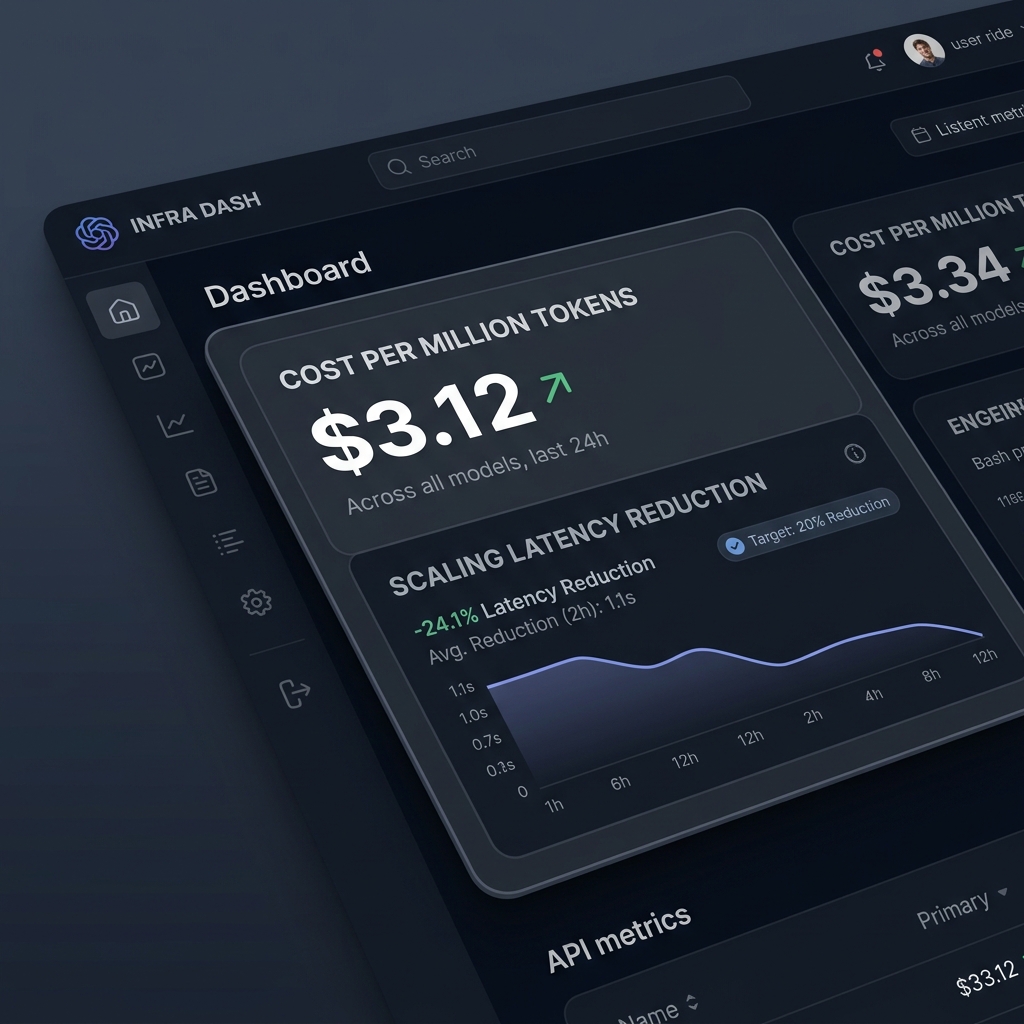
Understanding the chatgpt api price is the first step toward building a sustainable AI business. But knowing the price is not the same as managing it at scale. The difference between a $1,000 monthly bill and a $10,000 monthly bill is often just a few lines of inefficient code.
Many companies treat the API as a "black box" where they pour money in and get text out. At UseShift, we treat AI as a precision engineering component. We help businesses design architectures that use the right model for the right task. We implement prompt caching, batch processing, and intelligent routing to ensure you get the maximum intelligence for every dollar spent.
AI should be a profit center, not a cost center. By optimizing your openai api model pricing and implementing reliable monitoring, you can build tools that provide massive value while maintaining healthy margins.
Key Takeaways
- Select the right model for each task: GPT-4o for reasoning, GPT-4o mini for volume.
- Implement technical optimizations like prompt caching and batch processing to save up to 50%.
- Real-time visibility into token usage is essential for maintaining profitable margins in AI SaaS.
- Data security is built-in; OpenAI API data is not used for model training.
Ready to Optimize Your AI Spend?
Stop guessing your API costs. Let UseShift help you build a high-margin AI architecture with intelligent routing and caching.
Book a Strategy Call