

What is the process of developing artificial intelligence?
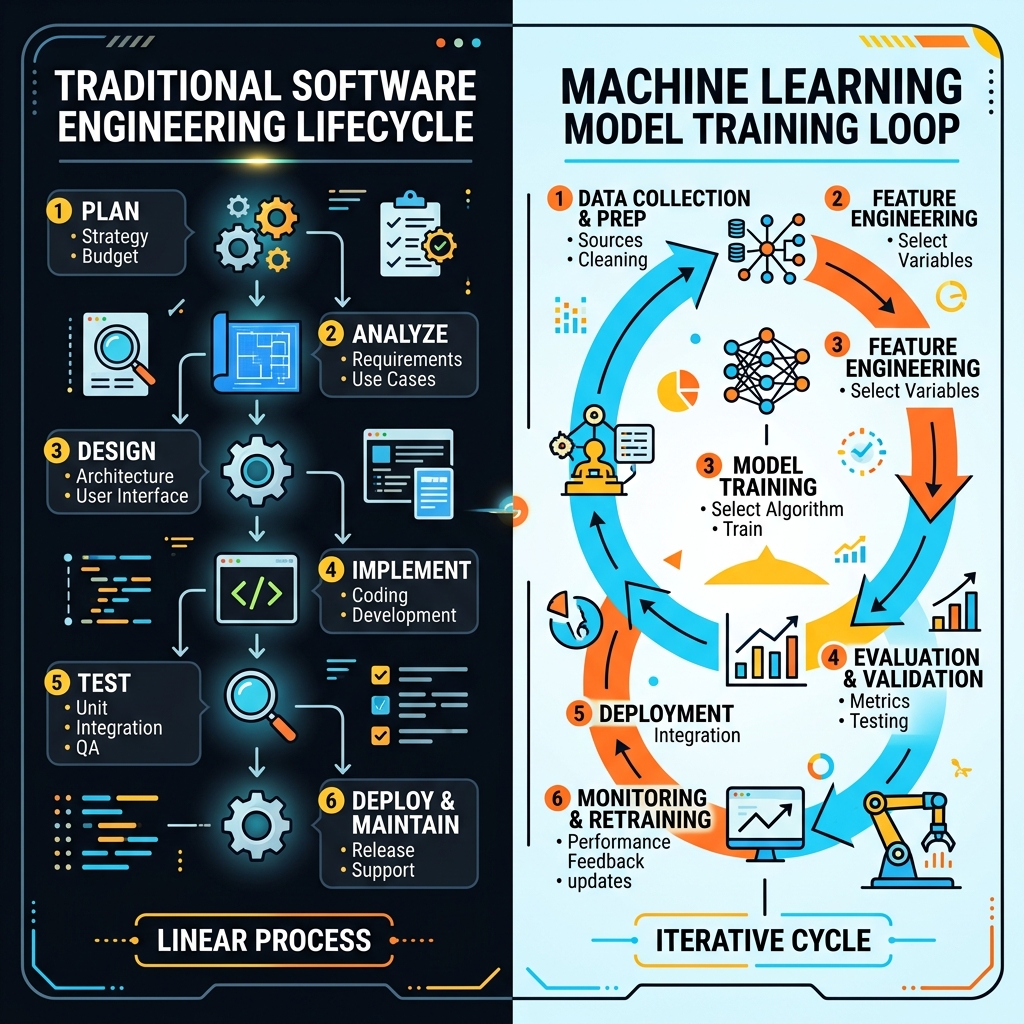
Developing artificial intelligence is a multi-stage lifecycle involving problem definition, data sourcing, pre-processing, model training, evaluation, and production monitoring. In 2026, the focus has shifted from simple generative models to autonomous Agentic AI that can execute complex workflows with minimal human intervention.
Introduction: The New Era of AI Engineering
Developing artificial intelligence is the process of designing, training, and deploying computational systems capable of performing tasks that typically require human cognition, such as pattern recognition, decision-making, and natural language processing. In 2026, this field has shifted from experimental research to the primary driver of enterprise efficiency. It is the backbone of the modern economy.
The transition from manual software to AI-driven ecosystems is no longer a luxury. It is a survival requirement. For a long time, software was deterministic. If X happened, then Y followed. Today, we build systems that learn from experience. We move away from rigid code. We embrace probabilistic models that adapt to new data in real time. This shift is why businesses are prioritizing developing artificial intelligence as their core technical strategy.
Looking back at the history of AI development, we see a clear trajectory. The 2010s were defined by "Discriminative AI"—models that could tell a cat from a dog. The early 2020s gave us "Generative AI"—models that could write poems about cats. The mid-2020s are the era of "Agentic AI"—models that can manage a cat shelter's logistics, marketing, and adoption pipelines autonomously. They don't just talk. They do.
At UseShift, we see this transformation every day. B2B SaaS teams are moving past simple chatbots. They are building autonomous agents that handle complex workflows. They are integrating ai in software development to automate code generation, bug detection, and system optimization. The goal is simple. Reduce manual overhead. Increase output quality. Stay ahead. This guide serves as your roadmap for this high-stakes environment.
The Core Pillars of AI Development
To understand the current state of the industry, we must look at the foundational technologies. Creating autonomous models is not a monolithic task. It involves several distinct layers of complexity. Each layer requires a specific set of skills and tools.
Machine Learning (ML) and Deep Learning (DL)
Machine Learning is the bedrock. It allows systems to improve without being explicitly programmed for every scenario. It relies on statistical methods to find patterns in data. Deep Learning takes this further by using neural networks with many layers. These networks mimic the human brain to process unstructured data like images and speech. In 2026, the efficiency of these models has reached a point where real-time inference is possible on edge devices. (This is the step most teams skip — and it shows.)
The Mathematics of Intelligence
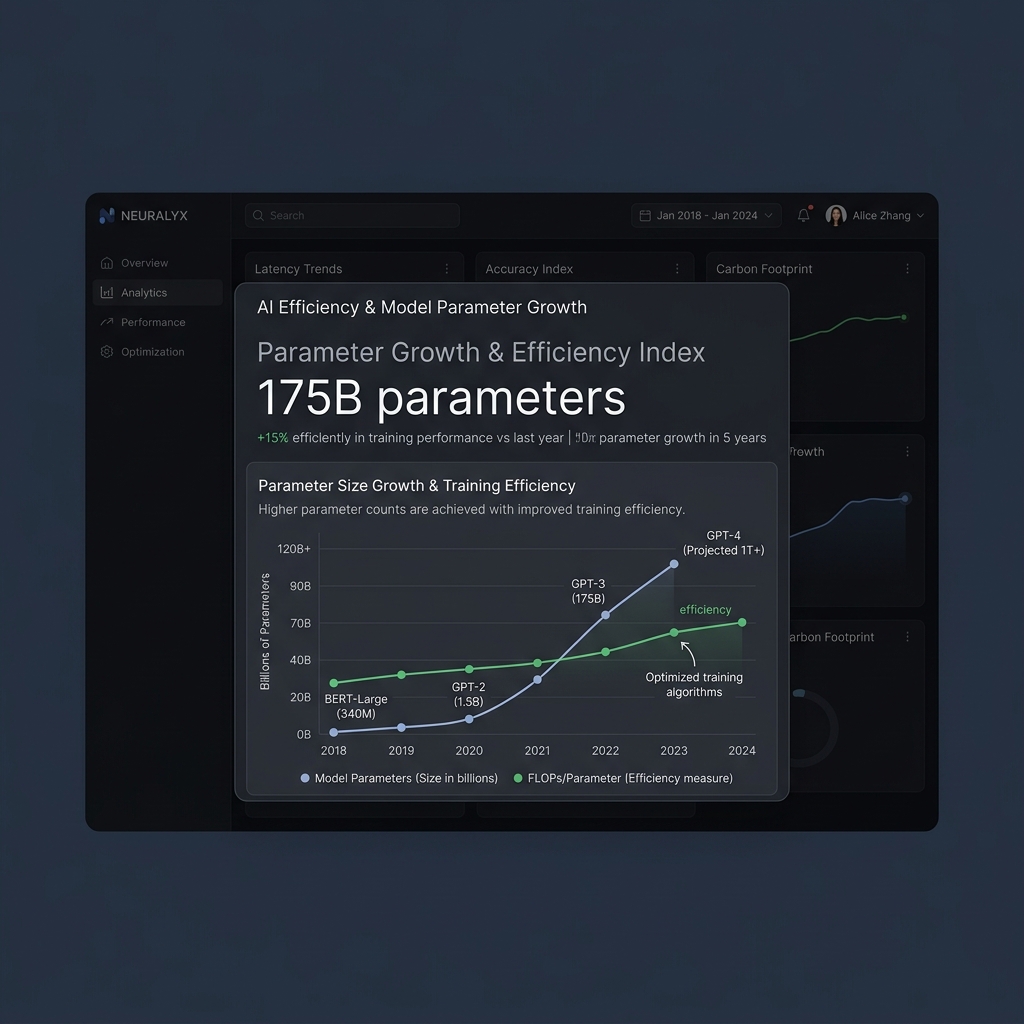
Developing AI requires a firm grasp of several mathematical domains. Linear algebra is used for representing data as matrices and vectors. Calculus, specifically backpropagation and gradient descent, is the engine that allows models to "learn" by minimizing errors. Probability and statistics help the model handle uncertainty. When an ai development service builds a model, they are essentially solving a massive multi-dimensional optimization problem. It's just math. Hard math.
Generative AI to Agentic AI
The biggest shift in recent years is the move from Generative AI to Agentic AI. Generative AI created content. It wrote emails and generated images. It was a tool you used. Agentic AI takes action. It is a partner you delegate to. It does not just suggest a reply. It researches the context, drafts the response, and sends it through the appropriate channel. This evolution is the focus of any modern ai development company. We are no longer building tools that talk. We are building systems that execute.
Artificial Intelligence in Software Development
The role of artificial intelligence in software development has expanded. It is not just about writing code. It is about the entire lifecycle. AI now assists in requirements gathering. It predicts architectural bottlenecks. It automates regression testing with a precision humans cannot match. When you integrate AI into your dev stack, you are not just adding a tool. You are upgrading your engineering capacity. Modern IDEs are no longer just text editors; they are collaborative AI environments. They think with you.
Key Takeaways
- Machine Learning and Deep Learning form the technological foundation.
- Solid mathematical understanding is essential for optimizing models.
- The industry is moving from content generation to autonomous action (Agentic AI).
- AI integration in software development covers the entire lifecycle, from planning to testing.
The AI Development Lifecycle: From Data to Deployment
Developing a production-ready AI system requires a disciplined approach. It is easy to build a demo. It is hard to build a system that scales. Here is how a professional ai development service manages the process.
Step 1: Problem Definition & Data Sourcing
Everything starts with the "Why." You cannot solve a problem if you cannot define it. Are you trying to predict churn for an enterprise ops team? Do you want to automate customer support? Once the goal is clear, we find the data. Data is the fuel. Without high-quality, relevant data, your model is useless. We look for internal logs, public datasets, and synthetic data to fill the gaps.
Common Pitfall
Many companies start with "We need AI" rather than "We need to solve X." This leads to expensive technical debt. Don't be that company.
Step 2: Data Pre-processing & Feature Engineering
Raw data is messy. It contains errors and duplicates. Pre-processing cleans it. We normalize values. We handle missing entries. Feature engineering is the creative part. We select the most relevant variables that will help the model learn. According to Anaconda's State of Data Science report (2025): data preparation accounts for 80% of the total development time. It is the difference between a model that guesses and a model that knows.
Our Internal Approach
We use automated data pipelines to handle the cleaning, but human experts perform the final feature selection. (The "human-in-the-loop" part is what makes it work.)
Step 3: Model Selection & Training
Now we choose the engine. Should we use a Transformer-based model? A Random Forest? A custom neural network? The choice depends on the problem and the available compute. Training involves feeding the data into the model. We adjust parameters. We watch the loss curves. We look for the "sweet spot" where the model generalizes well to new data.
Training Tips
We use techniques like learning rate scheduling and early stopping to prevent "overfitting," where the model memorizes the training data but fails in the real world. This is where most junior devs fail.
Step 4: Evaluation & Fine-tuning
Testing is non-negotiable. We use validation sets to check accuracy, precision, and recall. In 2026, we also test for "hallucinations" and bias. Fine-tuning involves taking a pre-trained model and specializing it for your specific domain. This is how you get a general LLM to understand proprietary legal documents or technical specs for a Fortune 500 company.
Metrics That Matter
For a support bot, we might care more about "Answer Completeness" than just "Response Time." Speed is useless if the answer is wrong.
Step 5: Production Deployment & Monitoring
Deployment is just the beginning. The world changes, and so does data. This is called "data drift." We monitor the model's performance in real time using tools like Arize or WhyLabs. We set up alerts for when accuracy drops. A reliable artificial intelligence development company provides ongoing support to make sure the system stays relevant. This is often called MLOps.
Technology Stack for Developing Artificial Intelligence
The tools we use define the limits of what we can build. In 2026, the AI tech stack has matured, offering a mix of high-level ease and low-level power.
Programming Languages: The Power of Mojo
Python remains the king due to its vast ecosystem. Libraries like NumPy and Pandas are essential. However, we are seeing the rise of Mojo. Mojo combines the usability of Python with the performance of C++. It is designed specifically for AI hardware. It allows developers to write code that runs directly on the metal without sacrificing the clean syntax we love. For low-latency applications, C++ is still used in the core engines of many frameworks.
Frameworks and Libraries: The Big Three
- 1. PyTorchThe industry standard for research and production. Its dynamic computational graph makes it flexible. It is the primary tool used by most ai development service providers.
- 2. TensorFlowStill prevalent in large-scale enterprise environments. Its "TensorFlow Extended" (TFX) ecosystem is excellent for production pipelines.
- 3. JAXGaining ground for high-performance research. It uses XLA (Accelerated Linear Algebra) to compile Python code for GPUs and TPUs.
For orchestration, we use LangChain and LlamaIndex. These tools connect LLMs to your data and existing software. They handle the "plumbing" of AI. They let us focus on the logic.
Infrastructure: Silicon and the Cloud
The hardware layer is where the heavy lifting happens. NVIDIA H100s and the newer B200 series are the gold standard for training. Google's TPUs (Tensor Processing Units) offer incredible efficiency for specific workloads. Cloud-native AI services from AWS (SageMaker), Azure (Azure AI), and Google Cloud (Vertex AI) allow us to scale compute on demand. This accessibility is why developing artificial intelligence is now possible for startups, not just tech giants. It levels the playing field.
Comparison: Building In-House vs. Partnering with a Specialist
Deciding how to build your AI capacity is a strategic choice. Do you hire a team or find a partner?
| Metric | In-House Team | AI Development Company (UseShift) | Hybrid Approach |
|---|---|---|---|
| Initial Cost | Very High (Recruitment + Salaries) | Moderate (Fixed Project or Retainer) | High |
| Time-to-Market | Slow (6-12 months to hire & sync) | Fast (Immediate start) | Moderate |
| Specialized Talent | Limited to your hires | Access to diverse experts | Balanced |
| Maintenance | High internal overhead | Handled by partner | Shared |
| Scalability | Rigid | Elastic | Flexible |
| R&D Risk | You bear 100% of the cost | Shared risk and proven models | Distributed |
Most enterprises choose an artificial intelligence development company to gain speed. The AI field moves too fast for traditional hiring. By the time you find a Lead Data Scientist, the state-of-the-art has changed twice. A partner provides the expertise immediately. They allow you to focus on your core business. They bring "lessons learned" from dozens of other implementations that an in-house team simply wouldn't have.
Practical Implementation: How to Build Your First AI Agent
Let's look at how we actually apply ai in software development to create an autonomous agent. This is the modern way of building workflows.
The Agentic Architecture
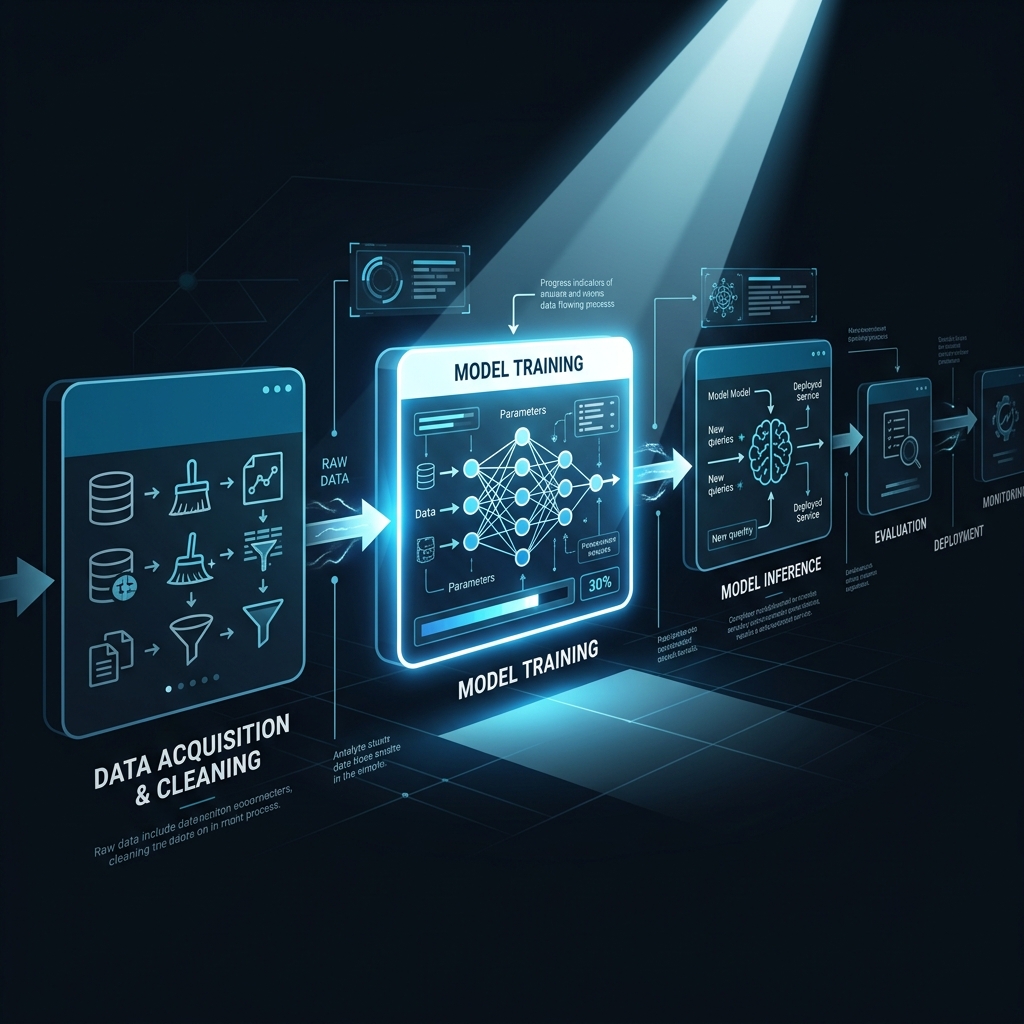
- Input Layer: Receives the trigger. This could be an email, a Slack message, or a scheduled task.
- Memory/Context Layer: This is where the agent stores past interactions and relevant data. We use vector databases like Pinecone or Weaviate for this. This allows for RAG (Retrieval-Augmented Generation).
- Reasoner (The Brain): Usually a high-end LLM like Claude 3.5 Sonnet or GPT-4o. It analyzes the input and decides on a plan. It uses "Chain of Thought" reasoning to break down the task.
- Action Layer (Tools): The agent has access to APIs. It can search the web, write to a database, or trigger a deployment script. It can even interact with physical hardware if needed.
- Output Layer: The final result. A completed task, a report, or a notification to a human supervisor.
A Real-World Workflow Example
Imagine a Lead Generation Agent. It doesn't just find names. It:
- Scours LinkedIn for recent job changes (Action).
- Checks financial reports for growth signals (Reasoning).
- Drafts a personalized message based on recent posts (Memory).
- Sends the message and schedules a follow-up in HubSpot or Salesforce (Action).
By using advanced machine learning techniques, we can build agents that don't just follow a script. They solve problems. If an API call fails, the agent notices. It tries an alternative. It learns which methods work best for specific users. This is the true power of agents.
The ChatGPT Ecosystem & Enterprise AI
The term chatgpt companies refers to the ecosystem built around large language models. OpenAI started the trend, but the market has exploded into a multi-layered industry.
Platform Providers vs. Solution Providers
OpenAI, Anthropic, and Google are platform providers. They provide the "raw" intelligence. Solution providers take that intelligence and build specific business value. They don't just give you a chat box. They give you a system that integrates with your CRM and your billing software. They handle the prompt engineering, the data security, and the integration glue.
Custom GPTs vs. Fine-tuned Open Source
Many businesses start with Custom GPTs. They are easy to set up. However, for true enterprise-grade performance and security, we often look at fine-tuning open-source models like Llama 3 or Mistral. This allows for "Private LLMs." Your data never leaves your infrastructure. This is mandatory for industries with strict compliance requirements, like healthcare or finance.
The Rise of Multi-Modal AI
In 2026, chatgpt companies are no longer just about text. They are about vision, audio, and video. Creating smart interfaces now means building systems that can see a factory floor and identify safety hazards, or listen to a customer call and detect frustration in their voice.
Case Studies: AI in Action (2026)
To understand the impact of automated intelligence, we must look at how it is applied in the field.
FinTech
Real-time fraud detection overhauled for a major bank. Resulted in a 60% reduction in false positives and a 25% increase in caught fraud attempts.
E-commerce
Hyper-personalized logistics using AI to predict order volume. Reduced delivery times to under two hours in major metropolitan areas.
HealthTech
Diagnostic assistance for radiology. AI assistants made radiologists 3x faster while significantly reducing error rates in early detection.
Manufacturing
Predictive maintenance avoided $2.4M in lost production time for a single facility by predicting robot failures on the assembly line.
A SaaS case study also showed that proactive AI interventions reduced churn by 18% in the first quarter of deployment. If a user gets stuck, the agent helps. Instantly.
Common Challenges & Risk Mitigation
Building production models is not without risks. You must be proactive in managing them.
Data Privacy and Security
When you use cloud-based AI, you are sending data to a third party. You must verify you are not leaking PII. Modern teams prioritize local processing and strict data masking. They use "Zero-Trust" architectures for AI integrations. (This is the only way to stay compliant.)
Bias and Fairness
Models are only as good as their data. If your data is biased, your AI will be biased. This can lead to reputational damage. We use specialized tools to audit model outputs for fairness. We guarantee diverse representation in training sets.
The "Black Box" problem and Explainable AI (XAI)
It can be hard to explain why an AI made a certain decision. This is the "Black Box" problem. In 2026, Explainable AI (XAI) is a focus. We build systems that provide a "reasoning trace." You can see exactly which pieces of data led to a specific output. This builds trust.
Warning
Never deploy an AI model that you cannot audit. If you can't explain why it denied a loan or flagged a transaction, you are opening yourself up to massive liability. Trust me on this.
Conclusion: The Future of AI Integration
Developing artificial intelligence is no longer just a technical challenge. It is a strategic one. The tools are available. The hardware is powerful. The data is waiting. The only thing missing for many businesses is the execution.
In the coming years, we will see the total integration of AI into every layer of the business stack. We won't talk about "AI features." We will just talk about software that works intelligently. Companies that embrace ai in software development now will have an insurmountable lead. They will operate with higher margins. They will move faster. They will innovate more. They will be more resilient.
The era of "Wait and See" is over. Every month you delay is a month your competitors are using to train their models and refine their workflows. Don't let your business get left behind. The shift to AI is happening now. UseShift is here to guide you through every step of the journey. We help you identify the right opportunities. We build the systems. Confirming they deliver real value is our priority.
Key Takeaways
- AI development is a strategic requirement for business survival in 2026.
- The shift from Generative to Agentic AI marks the era of autonomous execution.
- Success depends on quality data, specialized talent, and robust MLOps.
- Partnering with specialists like UseShift accelerates time-to-market and reduces R&D risk.
Last updated: March 2026 | By Kristaps Jansons