

What is an ai software development company?
An ai software development company is a specialized firm that designs, builds, and deploys autonomous systems and machine learning models tailored to specific business goals. Unlike general software houses, they focus on data orchestration, RAG architectures, and agentic loops to create systems that act independently rather than just reacting to prompts.
In 2026, the gap between standard software and AI-native systems defines the difference between market leaders and those falling behind. Every modern business is becoming an AI company by necessity. However, building these systems requires more than just an API key and a basic frontend. You need a partner that understands the deep integration of autonomous agents into existing business infrastructure. Choosing the right ai software development company is a decision that impacts your operational efficiency for the next decade.
1. What is an AI Software Development Company?
An AI development firm is a specialized engineering firm that focuses on building autonomous systems, predictive models, and agentic workflows. These firms differ from traditional software houses because they prioritize data science and machine learning over simple UI/UX design. While a standard firm might build you a beautiful dashboard, a specialized AI firm builds the "brain" that powers that dashboard. This is the step most teams skip—and it shows.
In 2026, the definition has shifted. We no longer look for firms that just build "wrappers" around models like GPT-4. We look for partners that can handle custom fine-tuning and secure local deployments. A technical AI partner must prove it can manage complex data pipelines and confirm that AI outputs are reliable, safe, and integrated.
Core Competencies to Look For
To be considered a top-tier partner, a firm must master several technical domains. They should excel at Retrieval-Augmented Generation (RAG). This is how your AI accesses your private company data without retraining the whole model. They must also understand agentic loops. These are systems that can plan, use tools, and correct their own mistakes.
At UseShift, we focus on this engineering-first approach. We believe that AI should not just talk to your customers. It should do their work. This requires a deep understanding of both legacy infrastructure and modern AI orchestration.
2. How It Works: The Architecture of Modern AI Systems
To build a reliable AI solution, a specialized AI firm must manage the Brain, the Senses, and the Hands. The Brain is the Large Language Model (LLM) or specialized machine learning model. The Senses are the data inputs—APIs, vector databases, and real-time streams. The Hands are the integrations that allow the AI to take action in your CRM, ERP, or communication tools.
The Tech Stack of 2026
Modern AI solutions rely on a specific set of tools. You will often hear about vector databases like Pinecone or Weaviate. These store data as "embeddings," allowing the AI to find relevant information in milliseconds. Orchestration layers like LangChain or LlamaIndex connect the models to these databases.
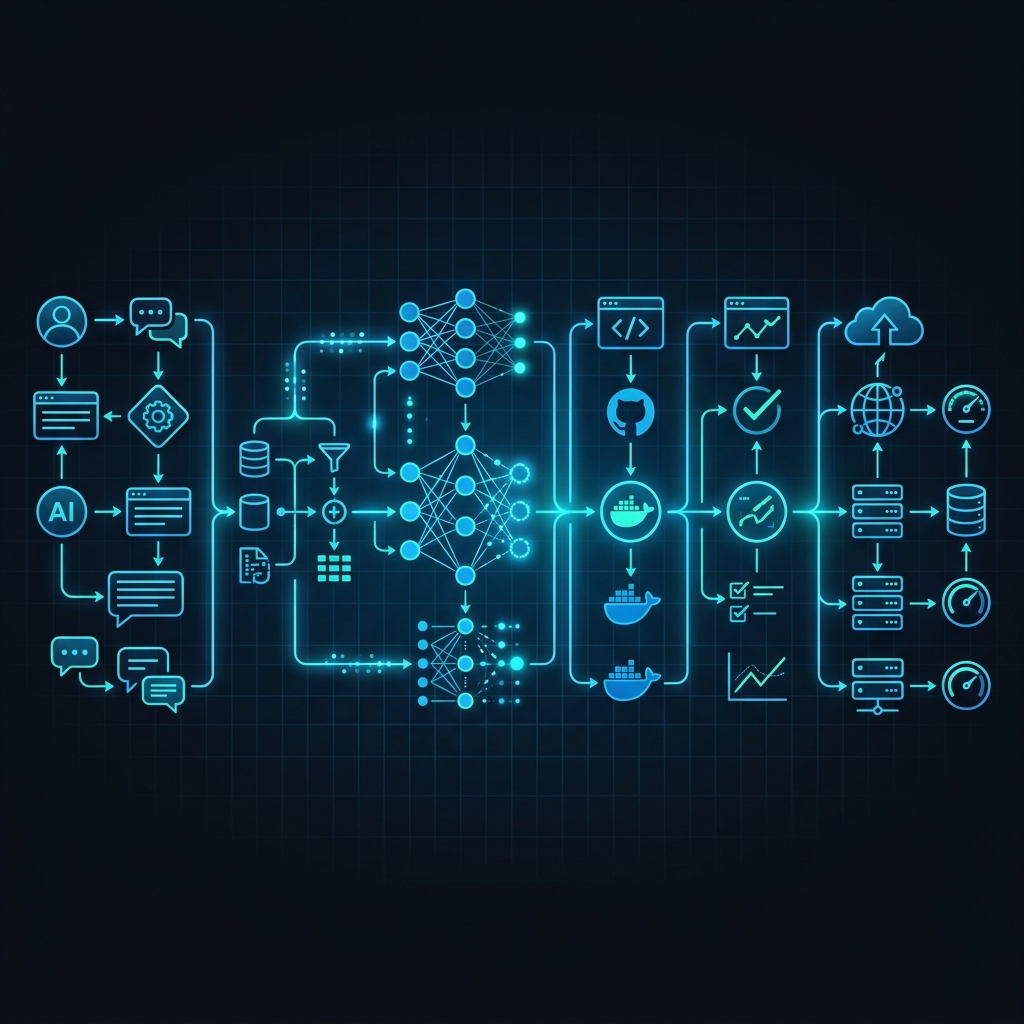
The shift towards "Small Language Models" (SLMs) is becoming standard. While GPT-4 is powerful, running a specialized model like Mistral or Llama 3.1 70B can often provide better results for niche tasks at a lower latency. An expert developer knows how to "quantize" these models. Quantization reduces the memory footprint of a model. It allows the software to run on cheaper, consumer-grade hardware while maintaining high performance. This is a cost-effective way to scale.
For autonomous workflows, many firms use tools like n8n or specialized agent frameworks like CrewAI and AutoGen. These frameworks allow multiple AI agents to talk to each other. One agent might be a "Researcher." Another is a "Writer." A third acts as a "Validator." If you want to see how this works in practice, our n8n workflow guides provide a detailed look at the infrastructure needed for autonomous operations.
Why Agentic Workflows Win
Simple generative AI is reactive. You ask a question, and it gives an answer. Agentic workflows are proactive. According to Gartner (2025): "By 2026, 75% of enterprise AI deployments will use agentic architectures to handle multi-step tasks." These agents don't just write an email. They research the lead, check the calendar, and book the meeting. This is the level of automation that a true AI engineering partner delivers.
It involves complex state management. When an agent fails a task, it must be able to "retry" with a different approach. This is self-correction. We implement these patterns to confirm that your business processes don't break when the AI encounters an unexpected response. Logic is key.
3. Deep Dive: Industry-Specific AI Solutions
Every industry has unique data constraints and operational needs. A generic engineering firm might try to apply the same template to every client. A specialized partner builds for your specific environment.
AI in Healthcare: Accuracy Above All
In healthcare, the cost of an error is high. An AI development partner working in this space must prioritize HIPAA compliance and "Explainable AI." Doctors need to know why an AI suggested a specific diagnosis or treatment plan. We build systems that cite their sources in real-time. For a detailed look at medical automation, see our guide on healthcare coding software.
According to the Journal of Medical AI (2025): "AI-driven coding systems reduced administrative errors by 42% in large hospital networks." This shows the tangible impact of specialized engineering.
AI in Fintech: Real-Time Risk Management
Fintech requires low-latency processing and fraud detection. Here, we use "Streaming RAG." This allows the AI to analyze transactions as they happen, rather than waiting for a batch process. An AI firm in fintech must also be an expert in data encryption and "Zero-Knowledge" architectures.
AI in E-commerce: Hyper-Personalization
E-commerce is about conversion. We build agents that act as personal shoppers. They remember a customer's preferences across multiple sessions. They don't just recommend products. They explain why a product fits the customer's style. This requires a deep integration between the AI and the existing inventory management systems.
This includes real-time feedback loops. When a customer adds an item to their cart, the AI can immediately suggest a compatible accessory based on the specific SKU's attributes. This isn't just a database query. It's an understanding of the product's function. This is the new standard. It's what keeps users engaged and buying more.
4. Why You Need a Specialized Partner
The temptation to build in-house is strong. However, the technical debt associated with AI is much higher than standard software. Managing "Model Collapse"—where AI begins to degrade because it is trained on its own synthetic data—is a full-time engineering challenge. (This is the part where most budget agencies fail — they focus on the UI and ignore the data pipeline.)
Technical Complexity and Safety
Prompt injection is a massive risk. This is when a user tricks your AI into revealing secrets or bypassing security. A general firm might miss these vulnerabilities. A specialized AI engineering partner builds guardrails at the kernel level. They confirm your data stays private.
Speed to market is another factor. Starting from scratch usually leads to a multi-million dollar mistake. Most in-house teams spend six months just setting up the environment. A specialized partner has the "vetted skill libraries" ready to go. You can find more about the technical requirements in our guide on developing artificial intelligence.
The Talent Gap
According to LinkedIn (2026): "There is currently a 4:1 ratio of AI job openings to qualified senior AI engineers." Hiring individual experts is expensive and slow. Working with an agency gives you immediate access to a team of data scientists, prompt engineers, and backend developers.
5. Comparison: General Firms vs. Specialized AI Partners
Choosing the wrong partner leads to "Pilot Purgatory." This is where you have a cool demo that never goes to production.
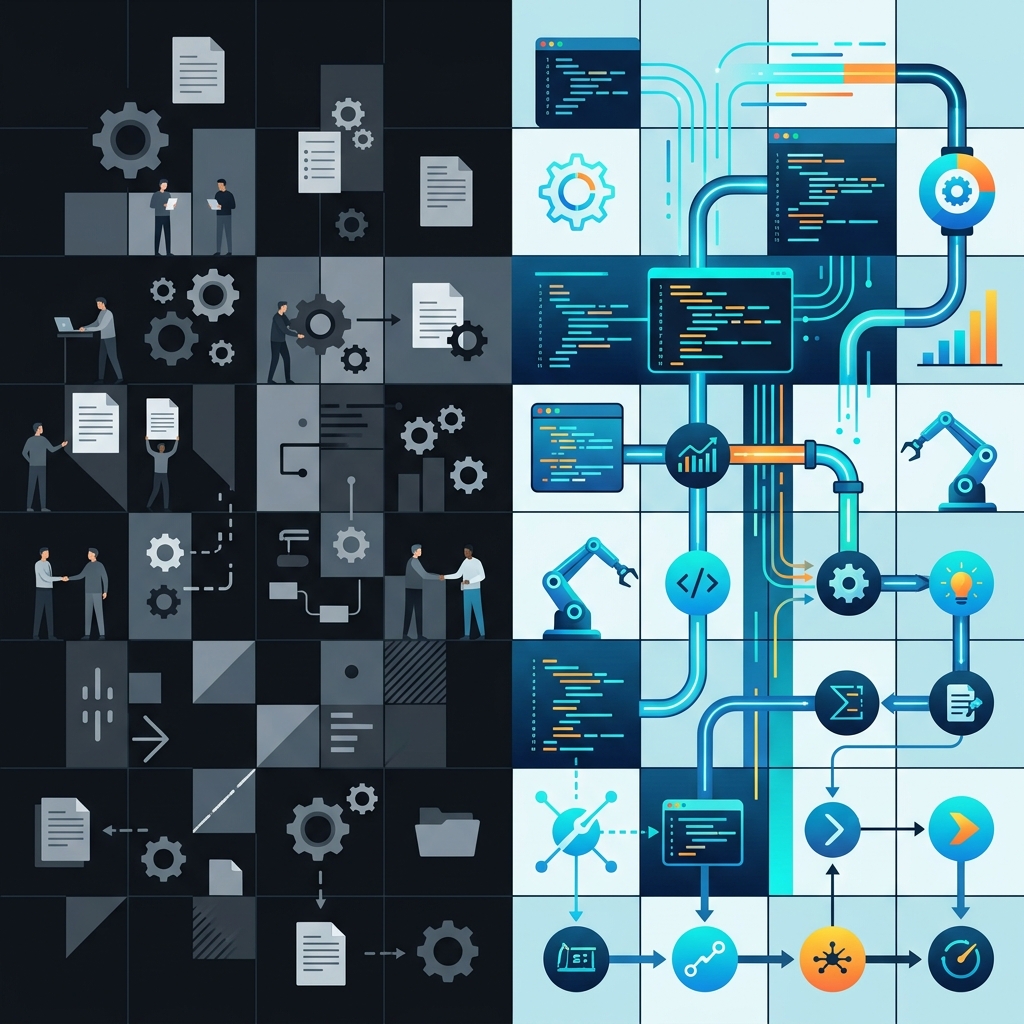
| Capability | General Software House | Specialized AI Company (e.g., UseShift) |
|---|---|---|
| Data Architecture | Standard SQL/NoSQL | Vector Databases & RAG Pipelines |
| LLM Knowledge | Basic API integration | Custom Fine-tuning & Quantization |
| Integration Speed | Slow (Build from scratch) | Fast (Pre-built Agent Frameworks) |
| Security | Standard Web Security | AI-Native Guardrails & Privacy Routers |
| Cost Efficiency | High Overhead | ROI-Focused Automation |
| Maintenance | Manual Updates | Automated 'Drift' Detection |
| Infrastructure | Standard Cloud VMs | GPU-Optimized Clusters & Edge AI |
A general firm will charge you for the hours they spend learning how AI works. At UseShift, you pay for the results our existing infrastructure delivers. We focus on the agentic AI vs generative AI distinction to confirm you get a system that actually works. We keep it simple.
6. Step-by-Step Guide: How to Select Your AI Partner
Follow this detailed framework to evaluate any AI firm you are considering.
Step 1: Audit Your Data Maturity
Is your data ready? AI is only as good as the information it can access. Ask the potential partner how they handle data cleaning. If they don't mention data governance or structured vs. unstructured data, they are not an expert.
You should look for a firm that can help you with "Synthetic Data Generation." When you don't have enough real-world data to train a model, a top technical partner can create synthetic data. This data mimics your real data while protecting privacy.
Step 2: Review Agentic Case Studies
Do not just look at "chatbots." Look for systems that solved a complex problem. Ask: "Can your system take an action in another software tool without a human clicking a button?" That is the mark of a true engineering partner.
Ask to see their "Error Handling" logs. A professional firm is proud of how their AI handles failure. If they say their AI never fails, they are lying.
Step 3: Evaluate Security and Compliance
Security must be a priority. Confirm they follow SOC2 or HIPAA standards if you are in a regulated industry. Ask about "Private LLM" options. This means your data never leaves your own cloud environment.
Check if they use "Anonymization Layers." This is a piece of software that strips personal names and credit card numbers out of data before it is sent to a model. This is a requirement for any top-tier AI partner in 2026.
Step 4: Technical Compatibility
How will the AI connect to your current stack? A good partner will ask for your API documentation on day one. They should have a clear plan for how the AI "Employee" will interact with your human employees.
They should also be experts in "Orchestration Engines." These are the tools that manage the flow of data between different AI models and your existing software.
Step 5: Start with a POC
Never sign a large contract without a Proof of Concept (POC). A specialized engineering partner should be able to build a functional prototype in 2-4 weeks. This proves they understand your specific business logic.
7. Common Mistakes When Hiring an AI Partner
Many executives fall into the "Demo Trap." A vendor shows a flashy video of an AI talking. It looks perfect. But in the real world, the AI gets confused by edge cases.
The "Prompt Engineering" Trap
Some firms claim to be a specialized AI firm but only write prompts. This is not engineering. Prompts are fragile. One update to the model can break them. You need a partner that builds "Model-Agnostic" systems. This means you can swap one AI for another without rewriting your entire application.
Avoiding the "Black Box"
Avoid proprietary platforms that don't let you export your data or models. If the company goes out of business, your AI dies. Demand an open-source or hybrid approach. This is why many businesses are looking at the facts about AI regarding ownership and long-term sustainability.
8. The Role of LLM Fine-Tuning and RAG
Most businesses do not need to build their own model from scratch. It is too expensive. Instead, they need a partner that can perform "Fine-Tuning" or "Retrieval-Augmented Generation" (RAG).
Understanding RAG
RAG is the gold standard for enterprise AI in 2026. According to Stanford AI Lab (2025): "RAG architectures reduce hallucination rates by up to 80% compared to base models." It works by giving the AI a "library" of your documents. When it gets a question, it looks up the answer in the library before speaking. This confirms the AI doesn't make things up.
The Hybrid Approach: Fine-Tuning + RAG
In 2026, the best technical AI solutions use both. We fine-tune a model to understand your industry's specific language. Then we use RAG to give it access to your real-time data. This combination provides the highest possible accuracy and the most professional tone.

9. Technical Backing: The Reality of AI in Production
To build a system that lasts, your partner must consider latency and cost. Running a model like GPT-4o for every tiny task is a waste of money. A smart AI solutions provider will use a "Model Router." Architecture determines longevity.
Model Routing Strategies
This system sends simple tasks to small, cheap models (like Llama 3 or GPT-4o-mini). It only sends the hardest tasks to the expensive models. This can save you 60-70% on your monthly API bills. According to OpenAI (2025): "Efficient model routing is the number one predictor of long-term AI project viability."
Security and Data Sanitization
We also focus on "Data Sanitization" pipelines. Before any data reaches a Large Language Model, it must be stripped of Personally Identifiable Information (PII). This is a multi-stage process involving regex filters and smaller models trained to detect sensitive patterns. It's the only way to build enterprise-grade systems in 2026. Security is non-negotiable. Without it, your AI project is a liability. It's a risk you cannot afford. It's the only way to confirm long-term safety.
Observability and AIOps
Once an AI is in production, you need to monitor it. We use "AIOps" tools to track how the AI is performing. Is it getting slower? Is it making more mistakes? We build dashboards that show you the ROI of your AI employees in real-time. This is a key service offered by any specialized AI agency.
Continuous Evaluation (CI/CD for AI)
AI is not "set it and forget it." The environment changes. Your data changes. A top-tier technical AI partner sets up an evaluation pipeline. They constantly test the AI against a "Gold Set" of perfect answers. If the accuracy drops, the system alerts the engineers. This is how we maintain high standards for all our clients.
10. The Future: AI Development in 2027 and Beyond
The next frontier for the specialized firm is "Embodied AI" and "Multi-Modal Agents."
Multi-Modal Intelligence
Currently, most AI systems focus on text. In 2027, AI will process video, audio, and sensor data in real-time. This will allow for autonomous agents that can "watch" a video of a software bug and fix it automatically.
Decentralized AI
We are also seeing a shift towards "On-Device AI." Instead of sending your data to a central cloud, the AI will run directly on your employees' laptops or your company's local servers. This provides privacy and speed. A forward-thinking partner is already preparing for this shift.
12. The Shift to the AI-First Enterprise
The market is moving fast. Companies that wait for the technology to mature are losing their competitive advantage. The reality is that the technology is already here. The only bottleneck is the implementation.
An ai software development company is your bridge to this new reality. They provide the expertise you lack and the speed you need to survive. Whether you are looking to automate your lead generation or build a custom internal knowledge base, the right partner makes the difference.
We help businesses make this transition. We don't just build software. We deploy AI Employees that grow with your company. We focus on technical precision and clear ROI. This is how you win.
Your Next Steps
- 1. Identify one repetitive process that takes your team more than 10 hours a week.
- 2. Gather your documentation for that process.
- 3. Book a free AI Audit with a specialized partner to see if it can be automated.
The era of manual overhead is ending. It is time to shift.
Key Takeaways
- AI specialized firms focus on RAG, agentic loops, and data orchestration over simple UI.
- Agentic workflows are the new standard, enabling proactive autonomous task execution.
- Selecting a partner requires auditing data maturity and technical error handling strategies.
- Enterprise ROI in 2026 is driven by model routing, security guardrails, and automated observability.
Ready to Shift to Autonomous Efficiency?
Stop managing manual overhead. Deploy AI Employees that reason, act, and grow with your business.
Book Your Free AI Audit Today