

What is Velero for Kubernetes?
Velero is an open-source tool designed to safely backup and restore, perform disaster recovery, and migrate Kubernetes cluster resources and persistent volumes. It operates as a Kubernetes-native controller, managing both metadata in etcd and data in persistent storage via CSI snapshots or file-system level tools.
The digital landscape of 2026 is defined by resilience.
In this environment, your Kubernetes cluster is more than just a runtime; it is the lifeblood of your operation. Businesses that fail to treat their stateful data as a mission-critical asset find themselves lagging behind competitors who leverage Velero to ensure near-zero data loss. Whether you are facing a regional cloud outage or accidental deletion, Velero provides the technical insurance your infrastructure needs.
What is Velero?
Velero is a Kubernetes-native backup and disaster recovery tool. Originally developed by Heptio, it provides a unified way to protect your entire Kubernetes ecosystem. Unlike generic backup tools, Velero understands Kubernetes objects like Namespaces, Labels, and Selectors, allowing for granular and context-aware data protection.
In 2026, the demand for reliable backup solutions is at an all-time high. When we talk about kubernetes backup, we are referring to the ability to recreate your entire environment—metadata and stateful data—with a single command. Velero makes this possible by integrating directly with the Kubernetes API and your cloud provider's storage layer.
Key Takeaways
- Velero is open-source and Kubernetes-native.
- It protects both YAML configurations and Persistent Volume data.
- Ideal for disaster recovery, migration, and cluster upgrades.
The Technical Mechanics of Velero
To implement an effective strategy, one must understand how Velero interacts with the cluster internals.
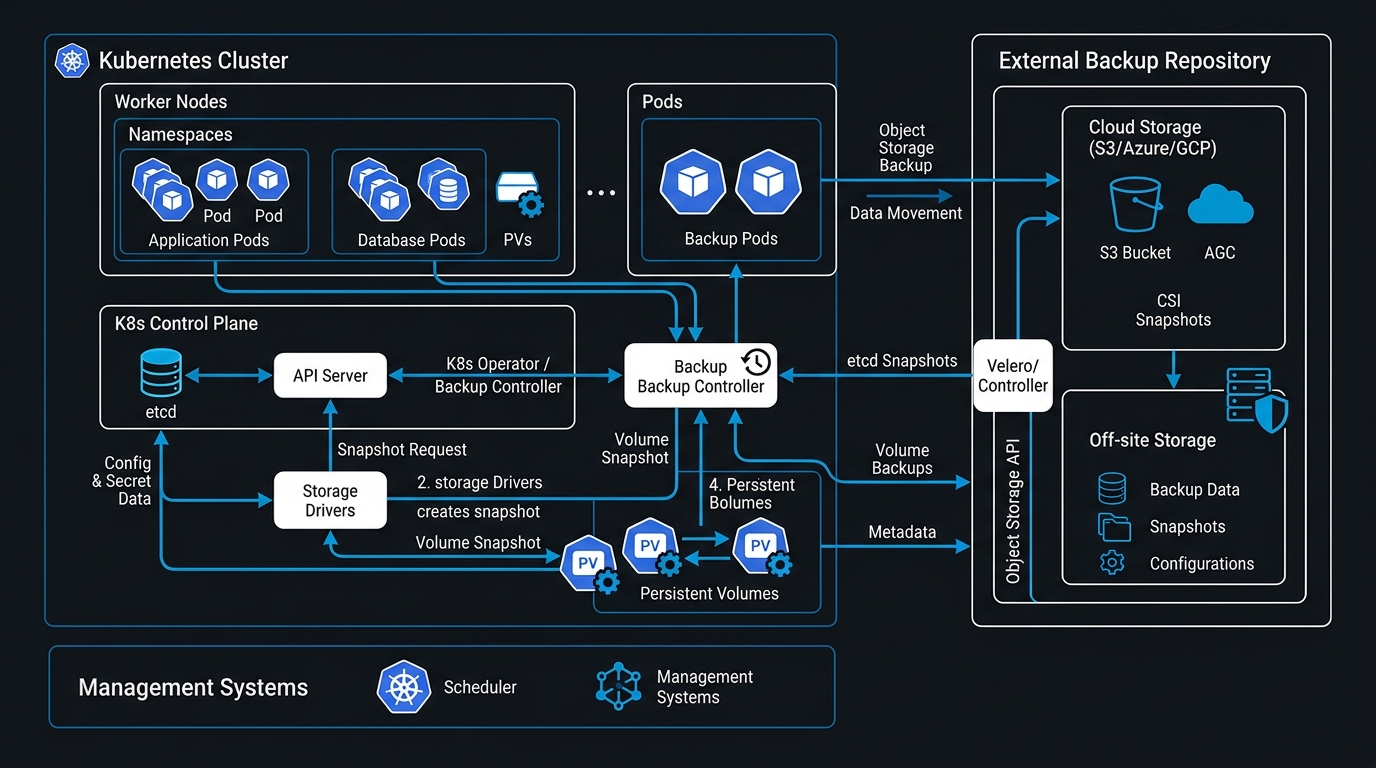
1. API Discovery
Velero queries the API server to find all resources matching your backup filters, ensuring no critical YAML is missed.
2. Volume Snapshots
It triggers CSI-based snapshots of your Persistent Volumes, capturing the exact state of your databases and file systems.
3. Object Storage
Metadata and volume info are securely uploaded to S3, Azure Blob, or GCS, keeping your backups offsite and safe.
4. Rapid Restore
During a disaster, Velero recreates resources in order, managing dependencies automatically for a clean recovery.
Velero vs. Kasten K10: Choosing Your Path
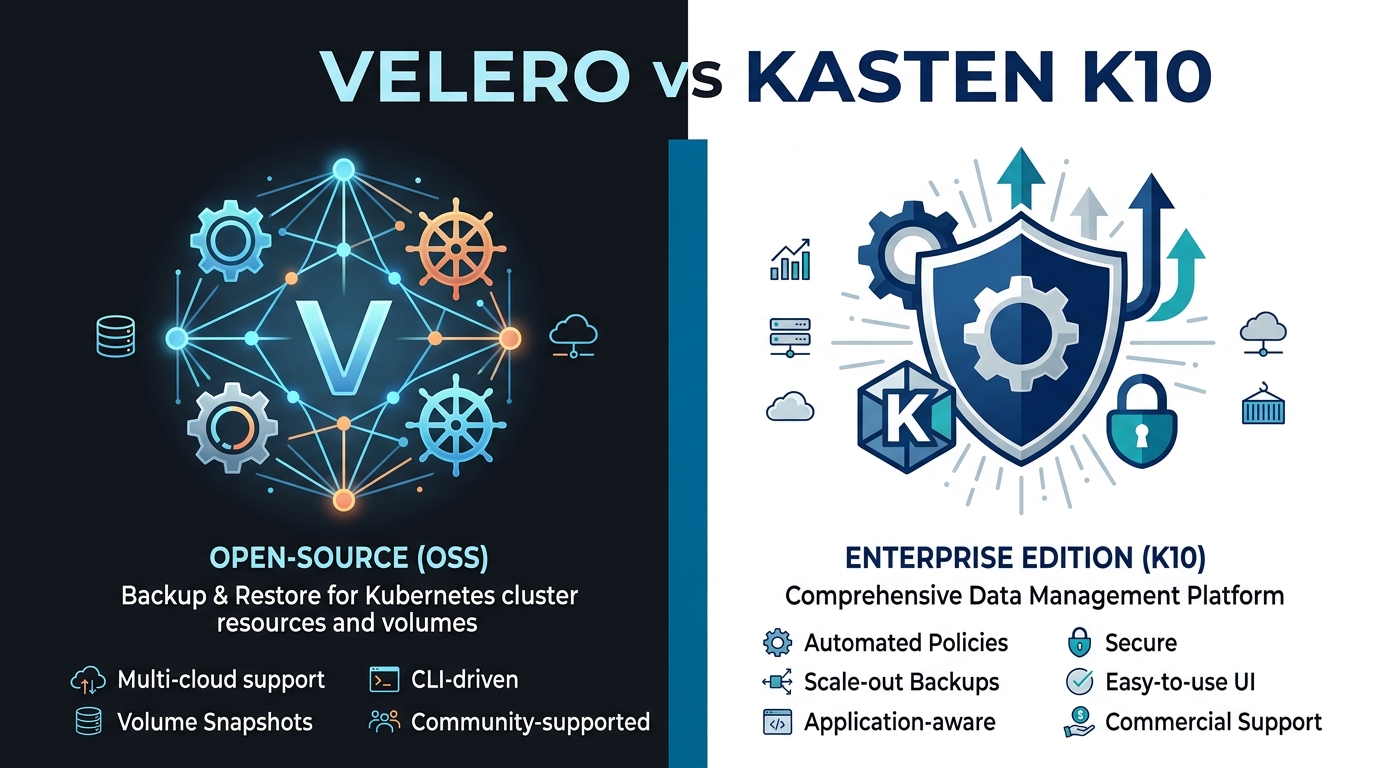
The choice between Velero vs Kasten often comes down to the balance between open-source flexibility and enterprise-managed features. While Velero is the favorite for DevOps engineers who live in the CLI, Kasten offers a GUI and more automated application blueprints.
| Feature | Velero (Open Source) | Kasten K10 (Enterprise) |
|---|---|---|
| Licensing | Apache 2.0 (Free) | Proprietary (Paid) |
| Management | CLI & YAML | Web Dashboard |
| App Awareness | Manual Hooks | Native Blueprints |
| Complexity | Lightweight | Heavy / Full-featured |
| Ideal For | Cloud-native DevOps | Large Enterprises |
Step-by-Step Guide: How to Install Velero
Installing Velero correctly from the start prevents restoration failures later. Always verify storage permissions first.
Professional **velero installation** involves three main stages: bucket preparation, CLI installation, and server deployment. In 2026, we recommend using workload identities (like AWS IRSA or GKE Workload Identity) instead of static secret files to enhance security.
# Install the Velero CLI and deploy to cluster
velero install \
--provider aws \
--plugins velero/velero-plugin-for-aws:v1.7.0 \
--bucket my-backups \
--use-volume-snapshots=true \
--backup-location-config region=us-east-1
Once deployed, your cluster is protected. You can then set up schedules to automate the backup process, ensuring you always have a recent recovery point.
Disaster Recovery Architecture
⚠️ Critical Warning
An untested backup is not a backup. Organizations that fail to perform quarterly restore fire drills often find hidden permission issues or corrupted snapshots during a real emergency.
A resilient **disaster recovery kubernetes** plan uses Velero to bridge the gap between regional zones. By replicating your object storage bucket to a secondary region, you can recreate your cluster in minutes if a major cloud provider region goes dark.
FAQ: Velero and Kubernetes Backup
How to install velero on EKS?
Installing on EKS is identical to the standard AWS installation, but we recommend using IAM Roles for Service Accounts (IRSA) instead of static secret files for better security.
What is Velero for Kubernetes?
Velero is a Kubernetes-native backup and disaster recovery tool that protects both cluster metadata and persistent volume data.
How does Velero backup work?
Velero queries the API server for resource definitions, bundles them, and triggers volume snapshots via cloud provider APIs, finally storing everything in object storage.
Velero vs Kasten: which is better?
Velero is better for teams seeking an open-source, CLI-centric tool. Kasten is better for enterprises requiring a GUI and native application-aware blueprints for databases.
Can Velero backup PVs?
Yes, Velero can backup Persistent Volumes (PVs) using either native cloud snapshots or file-system level tools like Restic/Kopia.
Conclusion
Implementing Velero is one of the most cost-effective ways to secure your Kubernetes infrastructure. Combined with Kubecost for financial visibility, it ensures your cluster is both resilient and economical. In 2026, where uptime is directly linked to market survival, having a professional-grade backup strategy is no longer optional.
At UseShift, we specialize in building resilient, automated cloud systems. If you're looking to optimize your Kubernetes disaster recovery or need help migrating complex stateful workloads, our team of experts is ready to assist. Contact UseShift today for a technical audit of your backup strategy.
Key Takeaways
- Velero provides industry-standard protection for K8s metadata and PV data.
- Automated schedules and offsite storage are non-negotiable for DR.
- Always test your restore process in a staging environment.
- Choose Velero for open-source flexibility and CLI-first workflows.