

What makes a top-tier blockchain development company in 2026?
A premier blockchain partner must possess deep expertise in zero-knowledge proofs, layer-2 scaling solutions, and complex smart contract auditing. In 2026, the focus has shifted from speculative tokens to high-scale infrastructure and automated compliance that integrates seamlessly with legacy ERP systems.
The role of a specialized engineering partner shifted radically in 2026. Two years ago, businesses looked for firms that could launch speculative tokens. Today, the demand centers on high-scale infrastructure, automated compliance, and private networks that handle millions of transactions per second. Choosing the right partner is no longer about finding a group of hobbyist coders. It requires a firm that understands the intersection of cryptography, game theory, and legacy system integration.
Modern enterprise blockchain implementation is less about the "chain" and more about the "business logic." If your organization wants to remove manual reconciliation from its supply chain or build a decentralized finance (DeFi) portal, you need a specialized team. General software agencies often treat ledger technology as a side project. Dedicated engineering firms treat it as the foundation.
This guide breaks down how to identify the best technical partners and why depth matters more than marketing promises.
What is a Blockchain Development Company?
A blockchain development company is a technical agency building decentralized applications, custom protocols, and private ledger systems. Unlike traditional web shops, these firms focus on immutable code. In blockchain, a smart contract bug can result in the permanent loss of millions of dollars. There is no undo button. This technical depth is essential for security.
This specialized focus is why the industry has diverged from general IT services. (This is the step most teams skip—assuming any developer can write Solidity—and it shows.)
Specialized firms provide architects who understand consensus mechanisms like Proof of Stake or Proof of Authority. They master cryptography, specifically Zero-Knowledge Proofs, and handle cross-chain interoperability. They don't just write code. They design economic systems.
At UseShift, we often see teams approach us after a generalist agency failed to deliver a functional dApp. High-stakes engineering requires a specific mindset where every line of code is treated as a permanent financial transaction.
Core Expertise of Top Firms
- Advanced Cryptography: Mastery of ECC, RSA, and ZK-SNARKs for private transactions.
- Consensus Design: Ability to pick the right mechanism for speed versus security.
- Smart Contract Security: Rigorous auditing and formal verification using tools like Certora or MythX.
- Infrastructure Management: Running validator nodes and maintaining network uptime for 24/7 operations.
Pro Tip
In 2026, the best firms offer a "Blockchain-First" approach. This means they build with decentralization as the primary goal. It is not a decorative feature added to a centralized database.
Core Services Provided by Blockchain Development Firms
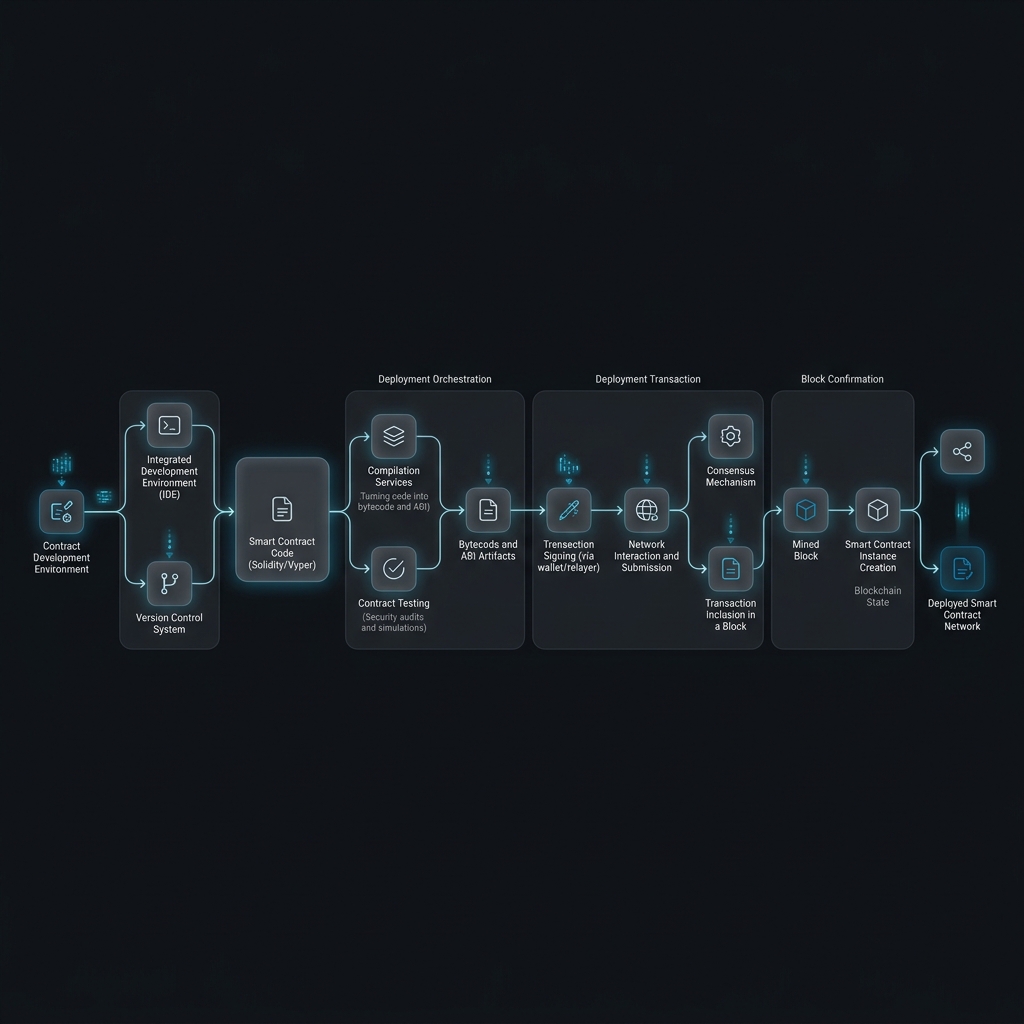
When you hire a specialized engineering team, you aren't just buying a website. You are buying a secure ecosystem. The scope of full stack blockchain development services has expanded to include everything from the base protocol layer to the user-facing mobile app. A specialized engineering firm provides the specialized skills needed to bridge the gap between decentralized ledgers and enterprise software.
Full Stack Blockchain Development Services
Full stack in this context means managing three distinct layers. First is the protocol layer. This involves choosing between Ethereum, Polygon, or a private Hyperledger Fabric instance. Second is the smart contract layer. This is where Solidity, Rust, or Go code executes the logic. Third is the interface layer. These are React or Flutter apps that talk to the blockchain via Web3 providers.
Top-tier firms guarantee these layers communicate without latency. According to a 2025 Industry Report by Gartner: "Over 65% of enterprise blockchain projects fail due to poor integration between decentralized ledgers and existing ERP systems." Specialized teams solve this integration problem by building custom middleware.
Blockchain Implementation for Enterprise
Blockchain implementation is the process of moving a manual or siloed business process onto a shared, cryptographic ledger. This shift is common in three specific industries:
- Logistics & Supply Chain: Real-time tracking of goods from factory floors to consumer shelves using IoT sensors.
- Healthcare Ops: Secure sharing of patient records between hospitals like Mayo Clinic or Johns Hopkins without a central point of failure.
- Real Estate Finance: Tokenizing commercial properties to allow fractional ownership for retail investors.
Wait. Is it worth the cost? In many scenarios, a simple database works better. But when trust is the bottleneck, a ledger is the only solution.
Tokenization and Programmable Assets
The underlying technology for digital assets remains relevant for regulated Security Token Offerings (STOs). Companies now use tokenization to raise capital or create high-fidelity loyalty programs. A professional engineering firm builds "programmable compliance" directly into the token. This means the asset itself knows it cannot be traded to an unverified wallet.
Why does this matter? It automates legal work. (Or at least most of it.)
Private vs. Public Development
Choosing between public (Ethereum) and private (Corda, Hyperledger) networks is a high-stakes business decision. Public chains offer maximum security and transparency. However, they often have higher costs and slower speeds. Private chains offer privacy and throughput. They lack the "trustless" nature of public networks but excel in B2B consortiums.
| Feature | Public Blockchain | Private Blockchain |
|---|---|---|
| Access | Open to anyone (Permissionless) | Restricted (Permissioned) |
| Speed | 15 - 100+ TPS | 10,000+ TPS |
| Cost | Transaction fees (Gas) | Infrastructure & Node costs |
| Privacy | Pseudonymous (Publicly Visible) | High (Encrypted/Siloed) |
| Best For | DeFi, NFTs, Public Trust | Banking, Internal Ops, B2B |
Blockchain vs. Distributed Ledger Technology (DLT)
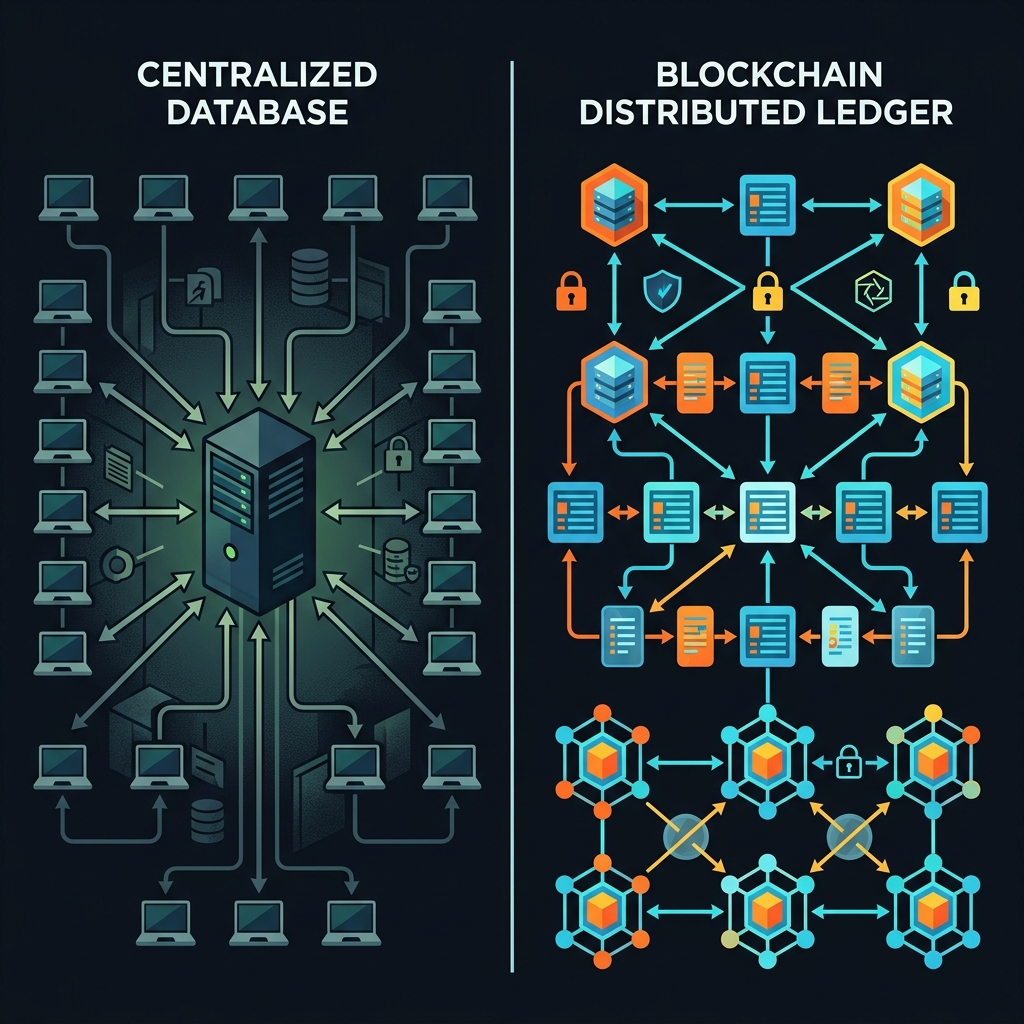
The difference between a blockchain vs distributed ledger is often the first point of confusion for enterprise teams. While often used as synonyms, they represent different architectural paths. A specialized consultant helps you decide which architecture fits your regulatory requirements and performance needs.
All blockchains are distributed ledgers, but not all distributed ledgers are blockchains. A blockchain organizes data into chronological blocks tied together with cryptographic hashes. A distributed ledger (DLT) is simply a database that is spread across multiple sites or institutions.
Why the Distinction Matters
Enterprises often prefer DLTs like Corda or R3. They don't require every node on the network to see every transaction. In a banking consortium, Bank A wants to transact with Bank B. They don't want Bank C seeing the details. A traditional public blockchain makes that difficult. You would need complex zero-knowledge proofs. A DLT allows for "point-to-point" privacy out of the box.
If your business needs a "single source of truth" but requires strict data silos between partners, we might recommend a DLT approach instead of a standard blockchain. This is a common strategy when building Ai Software Development Company integrations for global financial clients.
Key Takeaways
- Blockchain is a subset of DLT characterized by cryptographically linked blocks.
- DLT is a broader category that includes architectures like DAGs and permissioned networks.
- Choosing DLT over Blockchain is often driven by privacy and regulatory requirements.
How to Evaluate Top Engineering Partners
The market is crowded with agencies that claim to be experts. Finding the right technical partner requires a deep dive into their technical history and security philosophy. Here is a four-step evaluation framework.
1. Technical Depth and Open Source Contributions
Check their GitHub. A legitimate engineering firm should contribute to open-source protocols like Geth, Hyperledger, or Solidity. If their repositories are empty, they likely lack the depth to handle custom requirements. Look for smart contract code that has been audited by third-party security firms like Trail of Bits.
2. Security Protocols and "Immutable" Risk Management
Standard software allows for "fail fast, break things." Ledger code does not. Ask the firm about their security stack. Do they use formal verification? These are mathematical proofs of code correctness. Do they implement multi-sig wallets for administrative functions? According to Chainalysis (2025), over $3.2 billion was lost to smart contract exploits in the previous year. You cannot afford a partner who treats security as an afterthought.
3. Vertical-Specific Experience
A company that builds gaming NFTs might not understand the HIPAA requirements of a healthcare project. Ask for case studies in your specific industry. For example, if you are in the service sector, look at how they integrate with Web Development Services to create high-conversion user experiences.
4. Scalability and Layer 2 Expertise
In 2026, nobody builds directly on "Layer 1" (main Ethereum) for high-frequency apps. High-quality firms are experts in Layer 2 solutions like Arbitrum, Optimism, or ZK-Rollups. These technologies allow for thousands of transactions per second at a fraction of the cost.
Warning
Avoid firms that promise "zero-cost" development or "instant" results. High-quality engineering is expensive and slow. The stakes are permanent.

The Cost of Enterprise Implementation in 2026
The price of hiring a specialized team varies based on three factors: network type, complexity of logic, and integration needs. Blockchain implementation for an enterprise-level system requires significant upfront investment in architecture and security.
Pricing Breakdown
- Consulting & Architecture (2-4 weeks): $15,000 - $40,000. This is where the "Blockchain vs DLT" decision is finalized.
- Smart Contract Development: $30,000 - $150,000+. The cost increases with the complexity of the "game theory" involved.
- Frontend & Integration: $20,000 - $60,000. Connecting your dApp to user wallets like MetaMask and legacy SQL databases.
- Security Auditing: $15,000 - $100,000. This is non-negotiable for any project handling significant value.
| Project Tier | Estimated Cost (USD) | Timeline | Deliverables |
|---|---|---|---|
| MVP / Prototype | $40k - $70k | 2 - 3 Months | Basic Smart Contract + Simple UI |
| Mid-Market Solution | $100k - $250k | 4 - 8 Months | Full Stack dApp + Audits + API |
| Enterprise Ecosystem | $500k+ | 12+ Months | Custom Protocol + Governance + DLT |
We help clients optimize these costs by identifying "low-code" components for non-critical features. We then focus the high-cost manual engineering on the core smart contracts where security is paramount.
Case Study: Supply Chain Transparency in 2026
A global logistics firm partnered with a leading engineering firm to solve a recurring issue with counterfeit electronics. By using a private Hyperledger implementation, they created a digital twin for every high-value component.
The Results
- Reduced Overhead: Automated customs documentation saved $1.2M annually by removing manual audit steps.
- Transparency: Real-time visibility reduced dispute resolution time from 14 days to 4 hours.
- Security: Cryptographic proof of origin eliminated counterfeit parts in their primary tier of suppliers.
According to Deloitte (2025): "Companies using blockchain for supply chain management reported a 22% increase in operational efficiency compared to those using centralized databases."
Why UseShift is Your Strategic Partner
We don't just build ledgers. We integrate them into an AI-driven ecosystem. A database is powerful, but it's even more effective when managed by autonomous agents. Our AI Consulting Firms team works alongside our blockchain architects so that your data remains actionable.
We focus on:
- Interoperability: Ensuring your ledger works with your existing AI stack and ERP systems.
- Compliance: Building MiCA and SEC requirements directly into the smart contract code.
- Efficiency: Using Layer 2 scaling to keep gas fees near zero for high-frequency apps.
Start Your Shift Today
The decision to hire a specialized engineering partner is a commitment to the future of your infrastructure. Don't settle for an agency that treats decentralization as a buzzword. You need a partner that understands how to build "The Internet of Value."
Whether you are looking for full stack services or a simple blockchain implementation audit, our team is ready to help. We combine security with AI intelligence to give your business a permanent edge.
Ready to modernize your infrastructure?
Join the global enterprises leading the shift toward decentralized efficiency. Get your free blockchain feasibility audit today.
Contact UseShiftMeet the future with code you can trust.
Key Takeaways
- Blockchain partners in 2026 must offer deep cryptographic expertise beyond basic dApps.
- Full stack services bridge the gap between protocol logic and enterprise interface layers.
- Integration with AI and legacy ERP systems is the primary ROI driver for modern implementation.
- Security audits and formal verification are non-negotiable for high-value ledger projects.