

How is AI used in sports today?
AI in sports leverages machine learning, computer vision, and real-time telemetry to enhance athletic performance, prevent injuries, and optimize team operations. From 3D skeletal tracking in basketball to millions of race simulations in Formula 1, AI provides the predictive intelligence needed for a modern competitive advantage.
ai and sports is the application of machine learning, computer vision, and real-time telemetry to enhance athletic performance and team operations. This technology allows organizations to predict outcomes and automate complex decision-making processes. It is the bridge between raw physical talent and data-driven victory.
The intersection of ai and sports has moved beyond simple data collection. It is now about predictive intelligence. In 2026, the competitive advantage for professional teams is no longer found in who has the most data. It is found in who processes it fastest. From computer vision tracking fatigue in Los Angeles to generative models simulating races in Silverstone, technology is redefining what is possible.
Success is no longer just about the "eye test." (This is the shift that old-school scouts resisted for years—until the scoreboard forced their hand.)
Sports organizations are shifting from reactive analysis to proactive strategy. Traditional scouting relied on intuition. Today, "ai used in sports" translates to deep-learning models that analyze biometric markers and spatial positioning. These systems predict injury risk before a player even feels a strain. This guide explores the technical infrastructure of modern sports artificial intelligence and how organizations use these tools to win.
- The core technologies driving AI in modern sports (CV, ML, NLP)
- How predictive injury modeling saves millions in player value
- Real-world case studies from NBA, Formula 1, and Premier League
- Strategic integration frameworks for high-performance organizations
- The future of autonomous tactical support and fan engagement
How is AI Used in Sports Today?
AI is used in sports to automate operational workflows and enhance on-field performance through high-velocity data processing. Modern venues like the SoFi Stadium or the Tottenham Hotspur Stadium now operate as giant IoT hubs. Every ticket scan and player movement is recorded. This data serves as the foundation for both business intelligence and tactical execution.
At the operational level, "ai and sports" integration helps teams manage dynamic ticket pricing and crowd flow. Machine learning models analyze historical attendance data and local weather patterns to adjust prices in real-time. This secures maximum stadium occupancy and revenue. On the field, the application is even more sophisticated.
"Does this technology replace human judgment? Not at all; it provides the high-fidelity evidence that judgment requires."
The primary "ai use in sports" involves three core technologies: Computer Vision (CV), Machine Learning (ML), and Natural Language Processing (NLP).
1. Computer Vision
Systems like Hawk-Eye and Second Spectrum use multi-camera arrays to track the ball and every player on the field 25 times per second. This generates a 3D skeletal map of every movement.
2. Machine Learning
These algorithms process the raw spatial data from CV systems to identify patterns. For example, industry estimates suggest a quarterback’s passing accuracy drops by 12% when an opposing linebacker blitzes from the left side.
3. Natural Language Processing
Teams use NLP to parse scouting reports and social media data. It allows coaches to "query" their database using natural language, such as asking, "Which available free agents have the highest success rate in man-to-man coverage under 10 yards?"
According to MarketsandMarkets (2024): The global AI in sports market is projected to grow from USD 1.03 billion in 2024 to USD 2.61 billion by 2030, at a Compound Annual Growth Rate (CAGR) of 16.7%. This growth is driven by the demand for real-time data and the decreasing cost of high-performance sensors.
Sports Artificial Intelligence: Performance Analytics & Player Tracking
Performance analytics is the engine room of modern athletic competition, where "ai and sports" systems translate physical effort into digital insights. In 2026, the "sports and ai" relationship is built on a "Digital Twin" philosophy. High-performance teams create digital replicas of their athletes using data from wearable sensors and optical tracking. These twins are used to run simulations. They test how different training loads or tactical shifts might affect the athlete's physical output.
Sports AI Architecture: Performance Data Pipeline
[Player Motion] ----> (CV Cameras) ----> [3D Skeletal Data]
                                               |
[Internal Metrics] --> (Wearables) ----> [Biometric Data]
                                               |
                                        [AI Engine (ML)]
                                               |
       /---------------------------------------+---------------------------------------\
       |                                       |                                       |
[Predictive Injury]                 [Tactical Simulation]                   [Real-time ROI Stats]
(Pre-hab Alerts)                    (Digital Twin Run)                      (Broadcaster Feed)
Technical architecture of the modern AI sports performance ecosystem.
The Role of Computer Vision
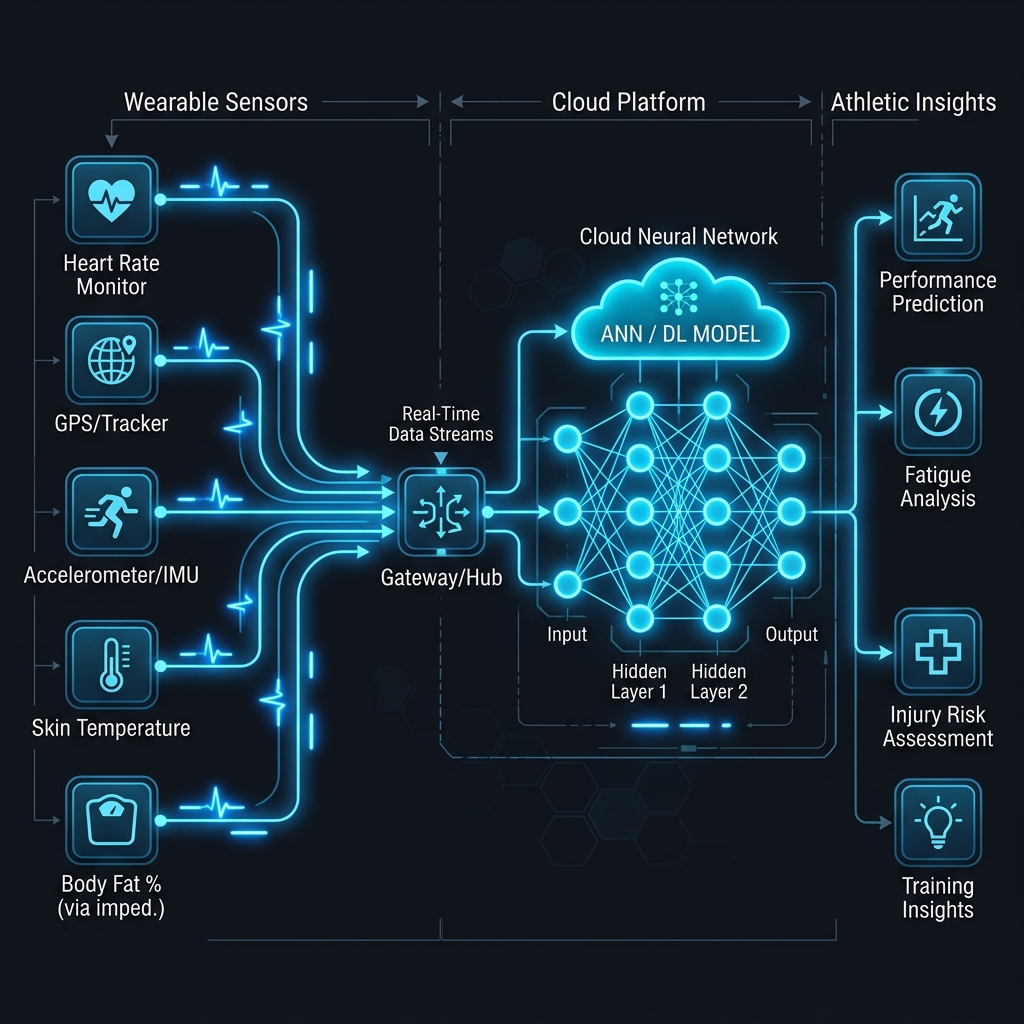
Computer vision is a highly impactful part of "sports artificial intelligence" because it requires no hardware on the player. Using high-resolution cameras positioned around the arena, AI models can calculate limb velocity, joint angles, and acceleration. This happens without a single wearable sensor.
In professional basketball, franchises like the Golden State Warriors use CV systems to track the arc and rotation of every shot. If a player’s shooting percentage is declining, the AI might identify a subtle mechanical flaw. It could show that their elbow is flaring out 3 degrees further than their career average. This level of technical precision was impossible with the human eye.
Coaches now receive real-time alerts. Their tablets suggest substitutions based on fatigue markers detected by the vision system.
Biometric Sensors and Wearables
While CV handles spatial data, wearables handle internal metrics. Devices from companies like Catapult Sports and WHOOP track heart rate variability (HRV), skin temperature, and sleep quality. When integrated with "sports and artificial intelligence" platforms, this data provides a complete picture of an athlete’s readiness.
UseShift helps organizations build custom AI workflows that ingest this biometric data and automatically generate recovery plans. Instead of a trainer manually reviewing 50 players’ sleep scores, our autonomous agents flag only the athletes who show a significant deviation from their baseline. This allows human experts to focus on the high-risk cases. The AI handles the routine monitoring.
Predictive Injury Modeling
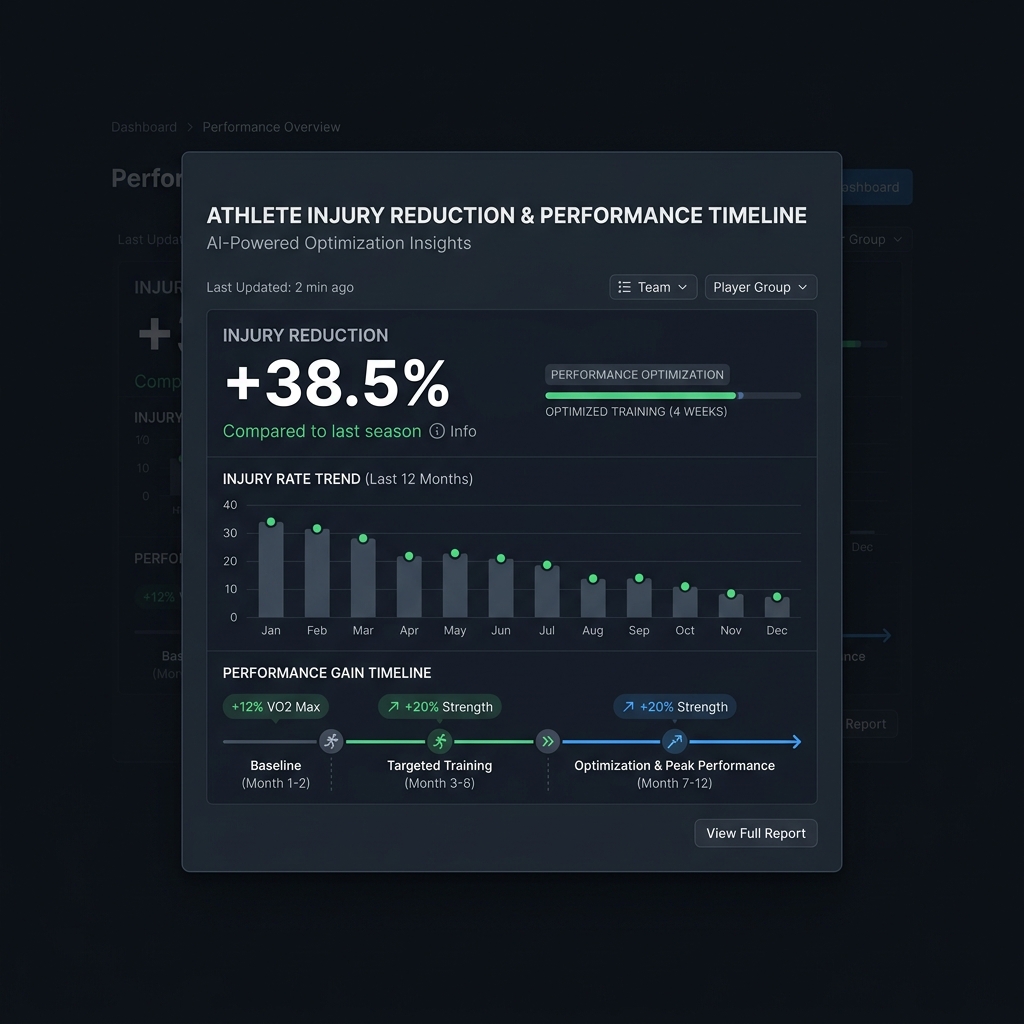
The highest ROI for "ai use in sports" is injury prevention. A star player missing a season can cost a team millions in revenue and championship potential. Predictive models analyze "mechanical load"—a metric that combines total distance run, the number of high-intensity sprints, and the cumulative impact on joints.
According to a study by Fortunebusinessinsights (2024): Performance analytics and player monitoring account for over 30% of the total artificial intelligence in sports market share. Teams are increasingly prioritizing "pre-habilitation" based on AI-driven risk scores.
AI in Sports Examples: Real-World Use Cases
Real-world "ai in sports examples" demonstrate that technology is not just supporting the game; it is redefining the rules of engagement. Different sports prioritize different AI applications based on their specific physical and tactical demands.
Basketball: The 3D Shot Doctor
In the NBA, "ai used in sports" is visible in every stadium. Systems like Second Spectrum provide coaches with "Expected Points" for every possession. If a player takes a contested mid-range jumper, the AI immediately calculates the value of that shot. It compares the risk to passing to an open teammate in the corner. This data has fundamentally shifted the league toward three-point shooting. The AI proved these are the most efficient ways to score.
Football (Soccer): The Rise of xG and Tactical AI
European clubs like Real Madrid and Manchester City have embraced "sports artificial intelligence" through the Expected Goals (xG) metric. xG uses machine learning to assign a probability to every shot based on distance, angle, and defender proximity. More recently, clubs have begun using AI for "pitch control" analysis. This model visualizes which team "owns" which part of the pitch at any given second. It helps coaches design better pressing triggers.
Formula 1: 300 Million Simulations Per Race
Formula 1 is the most data-intensive sport on the planet. During a single Grand Prix, a car generates billions of data points. Teams use "ai and sports" strategy tools to run massive simulations while the cars are still on the track. Industry reports indicate teams run up to 300 million race simulations in a single afternoon. If a safety car is deployed, the AI calculates the optimal pit stop window in milliseconds. It accounts for tire wear, fuel load, and the positions of all 19 other drivers.
Fan Engagement: Personalized Highlights
Beyond the field, "ai in sports examples" include the fan experience. Broadcasters use AI to automatically clip and share highlights. Instead of a human editor manually finding every dunk or goal, an AI model monitors the audio levels of the crowd. It uses computer vision to identify key events. This allows leagues to send personalized highlight reels to fans’ phones minutes after a game ends.
The Growing Artificial Intelligence in Sports Market
The "artificial intelligence in sports market" is currently in a hyper-growth phase, fueled by the accessibility of cloud-based machine learning. As AI models become more accessible through API integrations, even amateur and collegiate programs are beginning to adopt high-end analytics.
Market Size and Growth
The demand for "sports and ai" is not limited to the top 1% of teams. High school programs now use AI-powered cameras that automatically follow the action. This allows them to record games without a cameraman. This democratization is a major driver of market expansion.
According to Precedence Research (2024): The global artificial intelligence in sports market is estimated at USD 8.93 billion in 2024, with a forecast to reach approximately USD 60.78 billion by 2034, representing a CAGR of over 21%.
Key Investment Trends
Investment is flowing into three main areas:
- Edge Computing: Processing data at the stadium to reduce latency.
- Generative AI for Content: Automating the creation of social media posts and match previews.
- Smart Stadium Infrastructure: Using AI to optimize energy consumption.
| Metric | 2024 Estimate | 2030 Projection |
|---|---|---|
| Global Market Size | $1.03B - $8.93B | $2.61B - $15.5B+ |
| ML Technology Share | ~28% | ~35% |
| Fastest Growing Segment | Computer Vision | Computer Vision |
| Leading Region | North America | Asia-Pacific (Growth) |
Comparison Table: Traditional Coaching vs. AI-Augmented Strategies
The shift toward "ai and sports" doesn't replace the coach; it upgrades their capability. The following table highlights the fundamental differences in how teams operate with and without an integrated AI strategy.
| Feature | Traditional Coaching | AI-Augmented Strategy |
|---|---|---|
| Data Source | Visual observation & manual stats | Real-time telemetry & computer vision |
| Decision Speed | Minutes to hours (post-game) | Milliseconds (live in-game) |
| Scouting Scope | Limited to watched games | Global database of every tracked match |
| Injury Management | Reactive (after pain occurs) | Proactive (predictive load monitoring) |
| Tactical Testing | Trial and error on the pitch | Millions of digital twin simulations |
| Precision | Qualitative ("He looks tired") | Quantitative ("Sprint speed down 8%") |
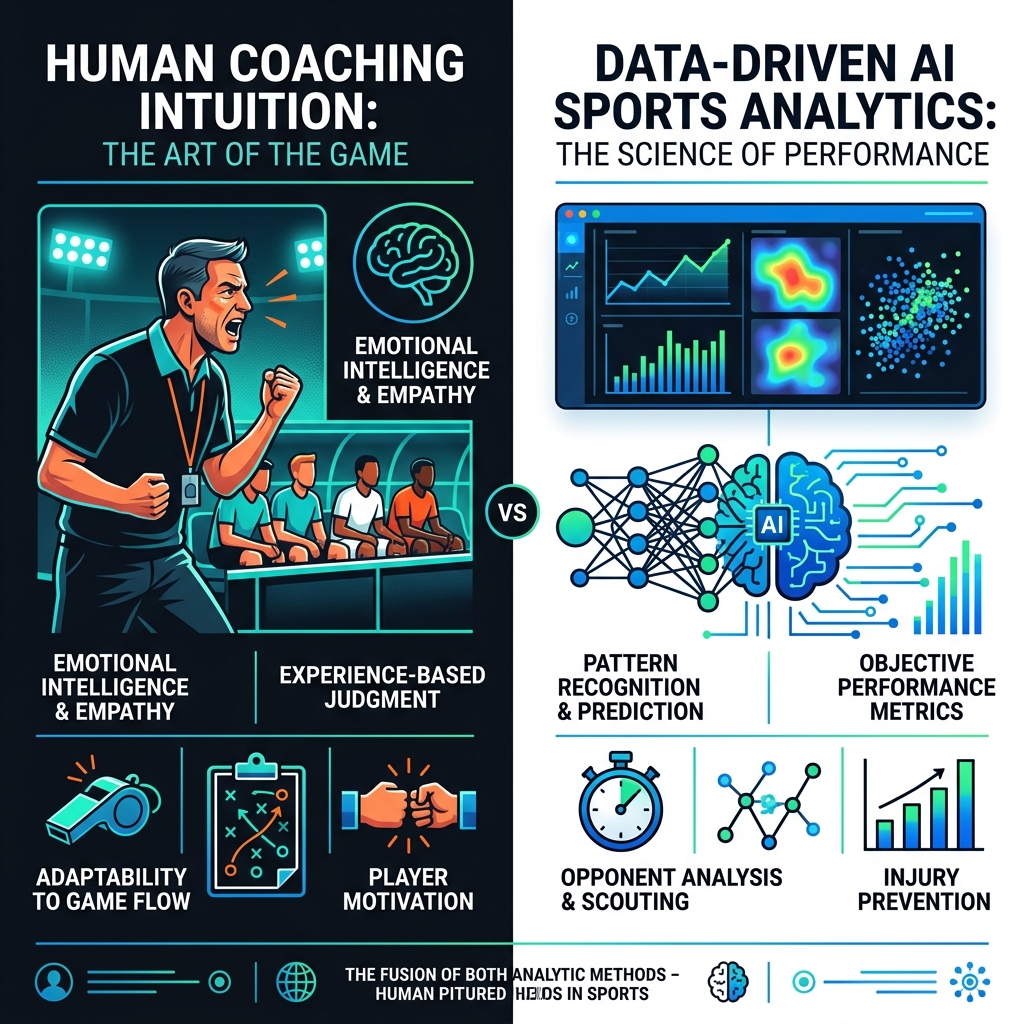
The goal for modern organizations is to find the "human-in-the-loop" balance. While AI can identify that a player is underperforming, a human coach is still needed to understand the "why." (This is where the nuance of leadership remains king.) At UseShift, we focus on this AI consulting to help teams integrate technology without losing the human element.
Strategic Integration: How Teams Adopt AI Use in Sports
Successfully deploying "sports artificial intelligence" requires more than just buying software; it requires a culture of data-driven curiosity. Teams that fail usually do so because their data is siloed across different departments.
Step 1: Building a Unified Data Lake
The first step in any "sports and ai" strategy is centralizing data. Scouting data, medical records, and tracking telemetry must live in a single, accessible location. This allows AI models to find correlations that humans might miss. For example, a specific training drill on Tuesday might lead to a higher injury risk on Saturday.
Step 2: Selecting the Right Tech Stack
Teams must choose between building custom models or using off-the-shelf platforms. For major leagues, custom development is the standard. Data-driven organizations often develop custom artificial intelligence frameworks tailored to their specific sport. A baseball team needs very different CV models than a rugby team.
Step 3: Training the Human Staff
The best AI in the world is useless if the coaching staff doesn't trust it. Integration must include a heavy focus on data literacy for coaches and trainers. They need to understand what "Expected Goals" actually means. They must know how to use it to influence their halftime talks.
Step 4: Ethical Considerations and Data Privacy
Athlete monitoring raises significant privacy concerns. Who owns the data from a wearable sensor? Can a team use biometric data to negotiate a lower salary? In 2026, "ai used in sports" must be governed by clear ethical frameworks to protect athlete rights.
Conclusion: The Future of Sports and Artificial Intelligence
The evolution of ai and sports is moving toward fully autonomous tactical support. We are seeing the beginning of AI systems that don't just provide data. They actually suggest real-time tactical changes that have been pre-simulated for success. As the "artificial intelligence in sports market" continues to expand, these elite-level tools will become available to every level of the game.
For sports organizations, the message is clear: the digital transformation is no longer optional. Teams that refuse to integrate "sports and ai" will find themselves unable to compete with the precision of data-driven opponents. The complexity of these systems can be daunting. But you don't have to build them alone.
UseShift specializes in helping businesses and sports organizations shift from manual data overhead to AI-driven efficiency. Whether you need to automate your scouting reports or build a custom performance dashboard, our team is ready to help.
Key Takeaways
- AI in sports has shifted from simple data collection to proactive predictive intelligence.
- The highest ROI for AI integration is found in injury prevention through mechanical load monitoring.
- Successful AI adoption requires a centralized data lake and high data literacy among coaching staff.
- Real-time simulations (up to 300 million per race in F1) are now the standard for tactical decision-making.
Ready to gain a competitive edge?
Shift from manual data overhead to AI-driven efficiency with a custom sports intelligence strategy.
Get Your Free AI Strategy Audit