
Which is better in 2026: AWS or Azure?
The choice depends on your needs. AWS is the leader for startups, open-source flexibility, and high-performance AI training. Azure is the standard for large enterprises heavily invested in the Microsoft ecosystem and seeking the best integration with OpenAI's latest models.
The cloud is no longer just infrastructure—it's intelligence.
In 2026, the debate between AWS vs Azure has moved beyond simple virtual machines. As organizations race to deploy autonomous agents and scale generative AI workloads, the choice between these two giants has become a strategic decision that affects every layer of the technical stack, from edge computing to global data residency.
Introduction
Amazon Web Services (AWS) remains the market leader by volume, maintaining its reputation as the most flexible and feature-rich platform. Microsoft Azure, however, has bridged the gap through deep enterprise integration and its strategic dominance in the generative AI space via its partnership with OpenAI. For those looking to master the Microsoft ecosystem, our definitive Azure cert path guide provides the full 2026 roadmap. In this guide, we perform a technical deep-dive into azure versus aws, comparing every critical service category.
Key Takeaways
- AWS leads in total number of services and instance type variety.
- Azure dominates the enterprise sector with deep Windows/Office 365 integration.
- Both platforms have massively expanded their AI capabilities for the 2026 landscape.
Compute Services: EC2 vs Azure VMs
Compute is the foundational pillar of any cloud strategy. When comparing aws vs azure services in the compute category, we look at raw performance, instance variety, and orchestration capabilities.
AWS Elastic Compute Cloud (EC2)
EC2 continues to be the industry standard for flexibility. In 2026, AWS has expanded its Graviton4 (ARM-based) processor lineup, offering superior price-performance ratios for specialized workloads. EC2 provides over 750 instance types, catering to everything from general-purpose web servers to high-performance computing (HPC) nodes with dedicated H100 GPU clusters.
Azure Virtual Machines
Azure's approach to compute is deeply integrated with the Microsoft ecosystem. For businesses running Windows Server or SQL Server workloads, Azure often provides a more seamless experience and significant cost savings through the Azure Hybrid Benefit. In 2026, Azure has significantly improved its Linux support, with over 60% of Azure VM instances now running Linux.
| Feature | AWS EC2 | Azure Virtual Machines |
|---|---|---|
| Total Instance Types | 750+ | 600+ |
| ARM-based Support | Graviton4 (Market Leading) | Ampere Altra (Growing) |
| Windows Integration | Strong | Native / Superior |
| Linux Support | Industry Standard | Excellent |
| Scaling Mechanism | Auto Scaling Groups | Virtual Machine Scale Sets |
Storage Solutions: S3 vs Blob Storage
Storage is the lifeblood of data-driven organizations. The comparison between aws vs azure storage services reveals two highly mature products with slightly different organizational philosophies.
Amazon S3
Industry-standard object storage with 11 nines of durability and specialized Express One Zone for low-latency AI workloads.
Azure Blob Storage
Highly scalable storage integrated into Azure Data Lake Storage, perfect for hierarchical big data analytics.
💡 Pro Tip
When designing for data-heavy AI applications in 2026, consider the proximity of your storage to your compute. Use AWS S3 Express One Zone or Azure Premium Blob Storage to minimize latency during the training phase.
AI and Machine Learning: SageMaker vs Azure AI
In 2026, AI is the primary differentiator. This is where the cloud computing comparison becomes most intense.

AWS SageMaker: A comprehensive platform that covers the entire ML lifecycle. AWS focus is on "democratizing AI" by providing pre-built models (Bedrock) and high-performance training infrastructure (Trainium and Inferentia chips).
Azure AI Services: Microsoft's integration with OpenAI has given it a massive lead in the "Agentic AI" space. Azure OpenAI Service provides exclusive access to GPT-4o and upcoming models, while Azure Machine Learning remains a favorite for enterprise researchers.
Pricing and Cost Management
Pricing is the most complex part of the aws vs azure decision. Both providers use a pay-as-you-go model, but their discount structures and management tools differ.

AWS Savings Plans
Commit to a consistent amount of compute usage ($/hour) for 1 or 3 years for deep discounts.
Azure Hybrid Benefit
Leverage existing on-premises Windows or SQL Server licenses to save up to 40% on cloud costs.
Multi-Cloud Strategy: The Best of Both Worlds
In 2026, the trend is increasingly toward multi-cloud strategies, where organizations use AWS for specialized compute and Azure for their "intelligence layer" and enterprise collaboration.
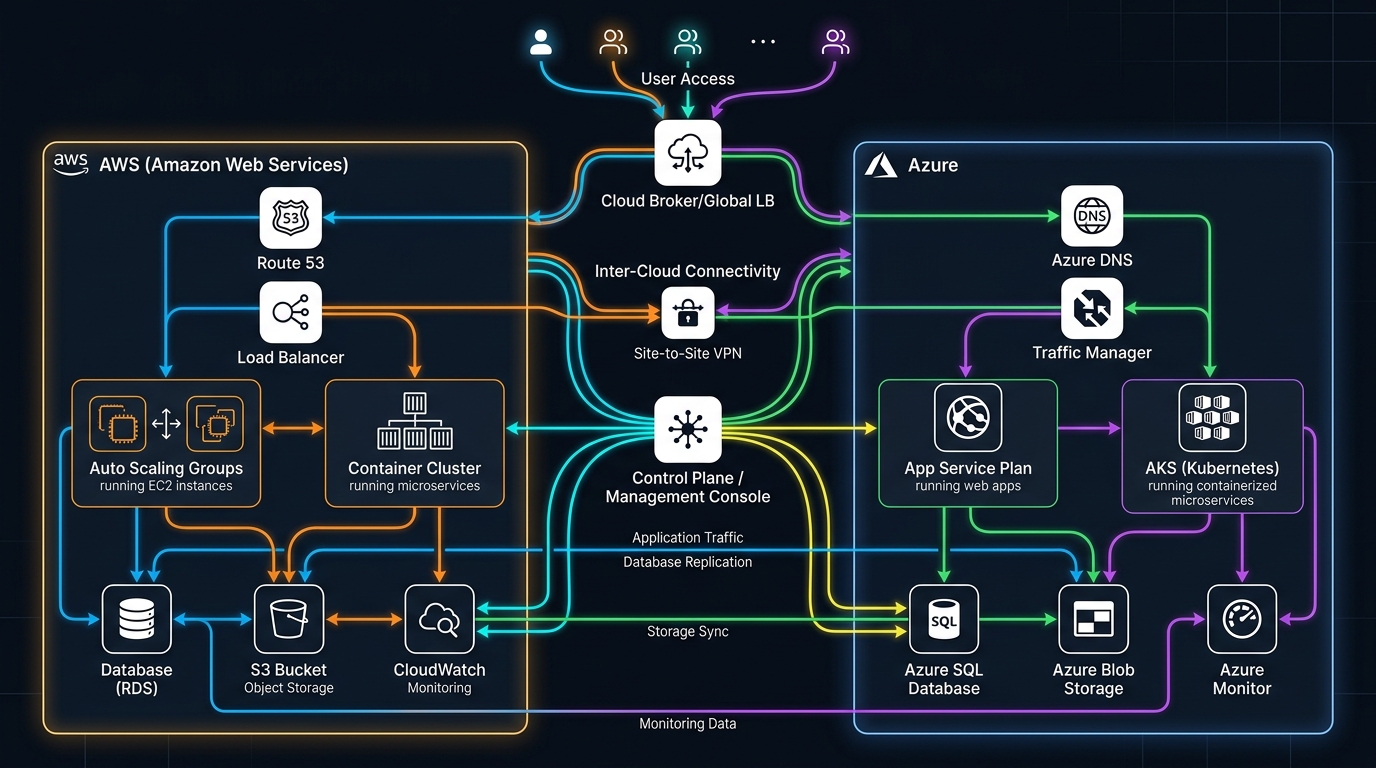
This approach allows companies to avoid vendor lock-in while leveraging the unique strengths of each platform—AWS's infrastructure diversity and Azure's AI and identity ecosystem.
Conclusion: Which One Should You Choose?
The winner of the aws vs azure battle depends entirely on your specific needs. Start with AWS if you need raw flexibility and open-source depth. Lean toward Azure if you are an enterprise focused on AI integration and Microsoft ecosystem synergy.
Need an AI-Native Cloud Architecture?
At UseShift, we help organizations design and implement multi-cloud strategies that actually deliver ROI. Let's discuss your roadmap.
Book a Strategy Call →Key Takeaways
- AWS is the standard for infrastructure flexibility and specialized compute.
- Azure is the preferred choice for enterprise AI and Microsoft ecosystem integration.
- Multi-cloud architectures are becoming the default for resilient, high-performance organizations.